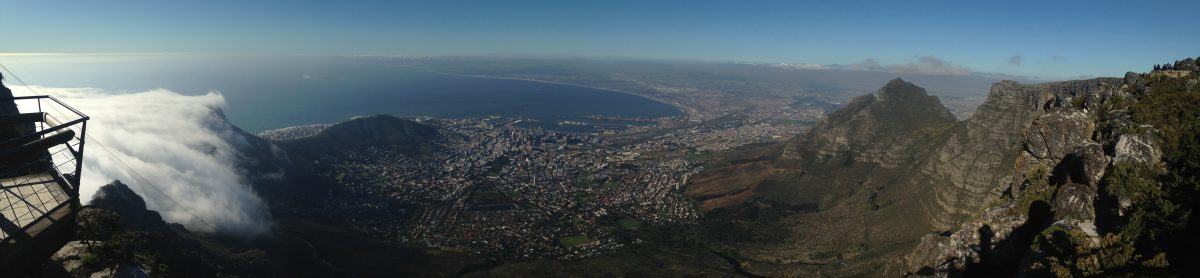

On Sunday evening, I flew from Johannesburg to Lusaka. I have never arrived in a country so ignorant. I couldn’t tell you the name of Zambia’s currency or president or share a single fact about its history. I do know enough about the US media and Africa to know that being able to be in complete ignorance about an African nation is a good sign—no political turmoil, natural disasters, droughts or famines.
I am here for two weeks to help out at RHO Appleseed, a community center in the Bauleni compound. My generous hosts are the organization’s founders, Joy and Ken Hoffman. They are California teachers who work at the American International School of Lusaka.
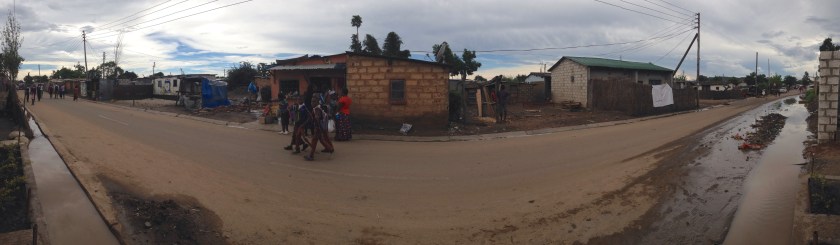
I did look up the location of the organization on Google maps before I arrived. Appleseed appears in a dense web of streets in an area that otherwise has few roads. The nearest business outside Bauleni was Paintball Mania! I assumed that Appleseed was in a dense pocket of relatively-poor humanity amidst a relatively affluent suburb. That assessment was spot on.
On our way to their house from the airport, Ken and Joy drove through the compound. At 10 pm on a Sunday evening, many people were out chatting and wandering. Ken and Joy live over the hill, a 15-minute walk from Bauleni, amidst other faculty from the American International School and the former president of Zambia.
I walk to Appleseed each morning. It is one of the highlights of my day to be out amongst the people of the township. I lived in Tanzania for a year and so being here feels like a homecoming. And unlike South Africa, Zambia is a remarkably safe country and I am cherishing the freedom to walk around.
 Appleseed has gone through several iterations in the seven years since Joy and Ken founded it. It is currently a community center where young people and young adults hang out, borrow books, and study. Elementary school here runs from either 8 to 12 or 12 to 4, so students are hanging out half the day. Government school class size is 55-60 students, sometimes up to 90, so there is a big need. And lots of young people don’t even attend school.
 Appleseed has a large library. Most of the books seem to be cast-offs from the American International School. As a result, the books are what you’d find in many homes in the USA, including ours when our daughter was a child. This means that most of the books do not reflect the lives of the young people of Bauleni, both in who is depicted or in the conditons of their daily lives.
One story that I helped a child read today was about a white girl who lived in a two-story house and had a new pair of shoes, a new dress and a new hat. She fell into a puddle and somehow didn’t get muddy. This was typical. Reading the books here gives me a new perspective on them. There was one book about a family in the drought of the Dust Bowl. Some days they didn’t have anything to eat and they had to sell the farm and move. Now that seemed realistic, even if the people were white.
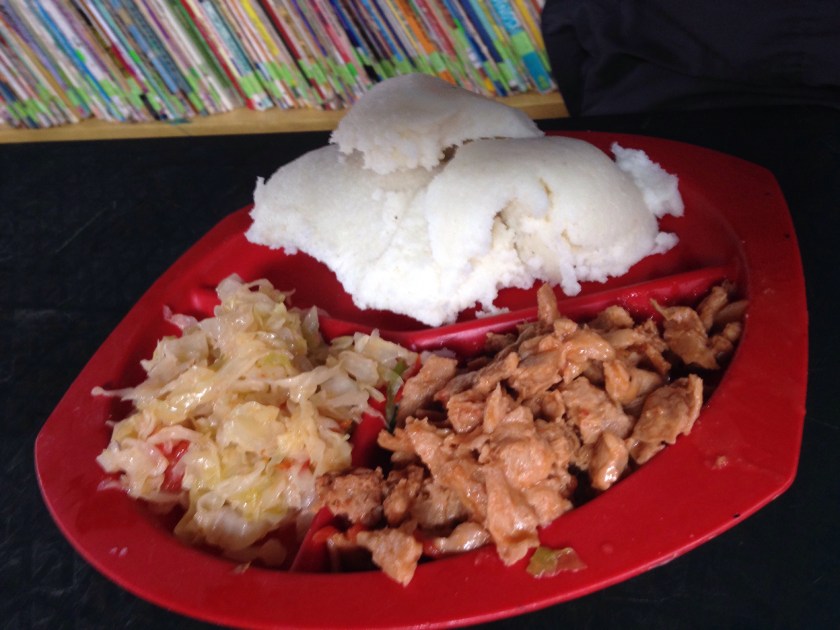 When I chat with the young people, I sometimes ask what they had for breakfast. The answer is usually nothing or tea. Athenian students have been raising money for Appleseed for six years and this money has gone to fund the meal program. I’ve been there four days and the lunch is always a mountain of nshima (a corn meal dish like Tanzania’s ugali or South Africa’s pap), fried cabbage, and some small serving of meat. The food is eaten by hand. Everyone eats everything on their plate.
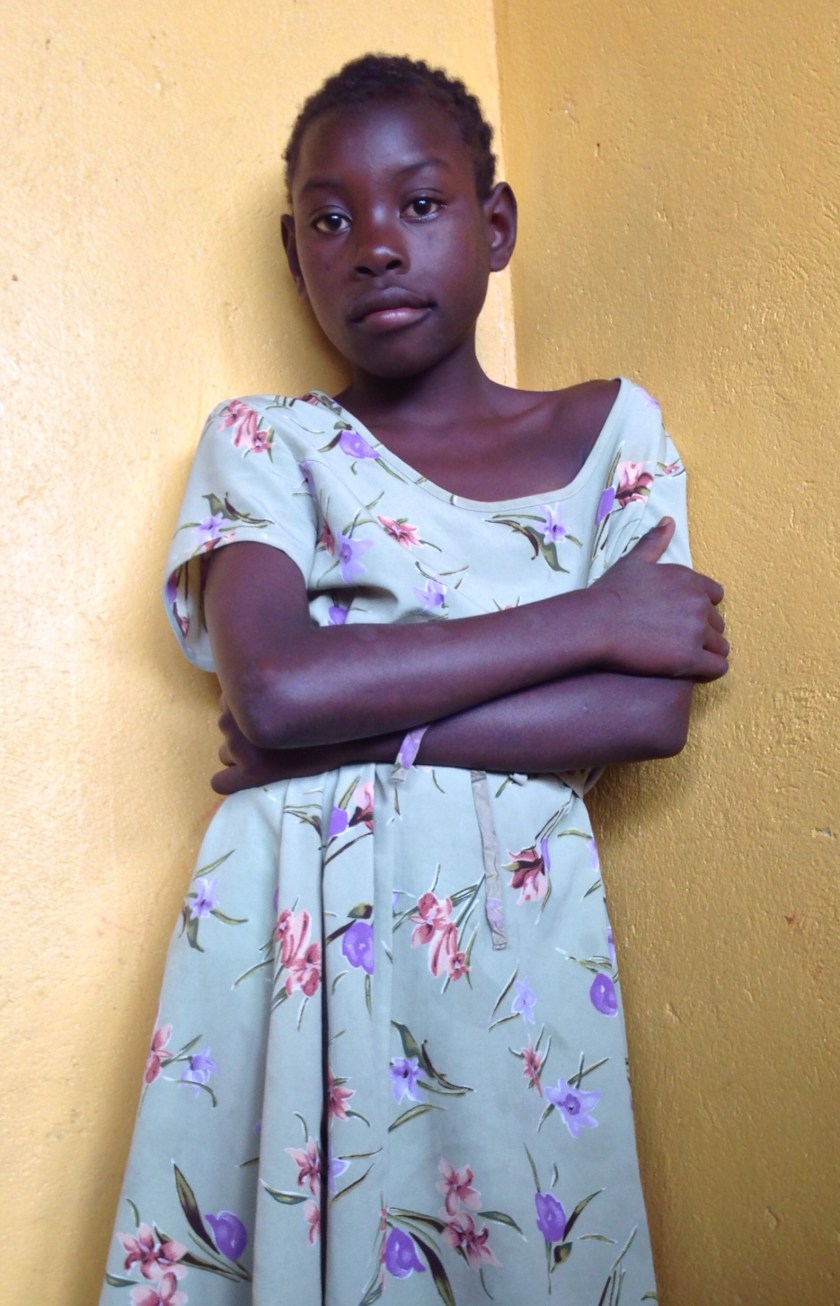
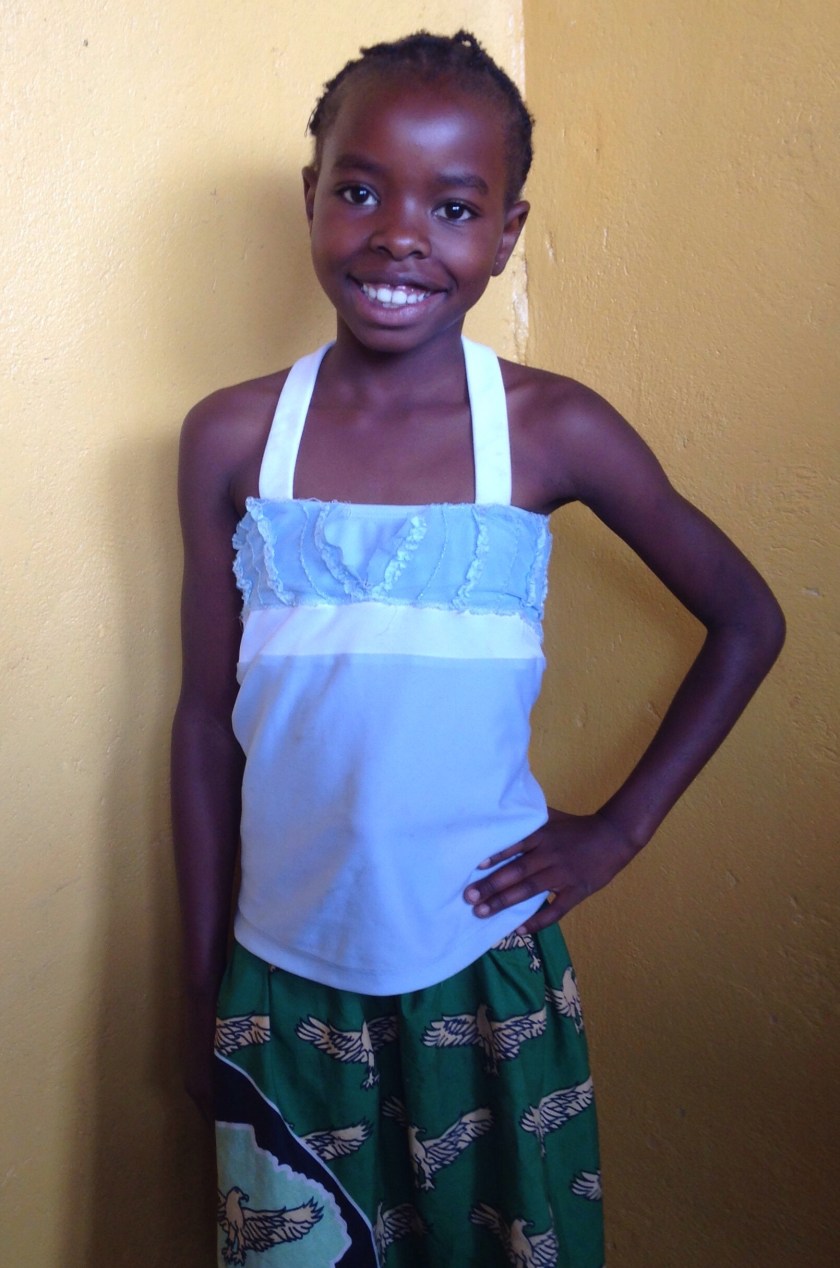 The young people I have met here are smart, vivacious and beautiful– if poorly educated. Today a group of girls asked what my daughter’s name is and sat around making cards for her. Lots of ‘love’ and hearts and ‘I want to be your best friend.’
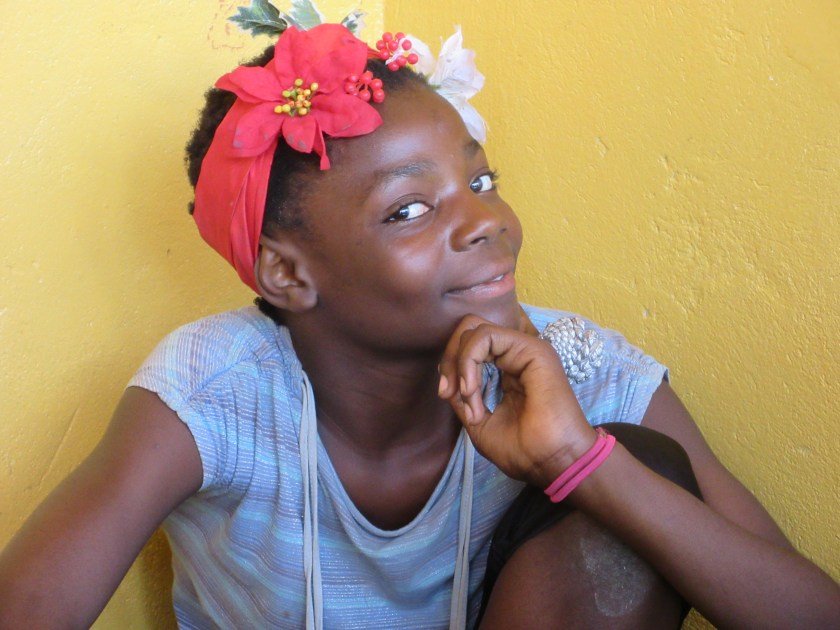 There was also one heart-breaking card to my daughter. ‘I want to come see you and prise [please] I don’t have my mother or my [father?] so I want you to take me so you a come to take me to molo [?] your hid [house?] come prise my name is Monica’
I read Monica’s card and gave her a big hug. I felt the profound challenges these young people face and I felt the meagerness of my offering.

 No Foreign Lands