
Being in South Africa, I often reflect on the history of racism towards people of African heritage here versus in the United States. Moreover, there are also lots of cultural connections between black Africans here and African Americans in the United States. But when comparing the United States and South Africa, the group in the USA whose position is probably most akin to that of black Africans is Native Americans.
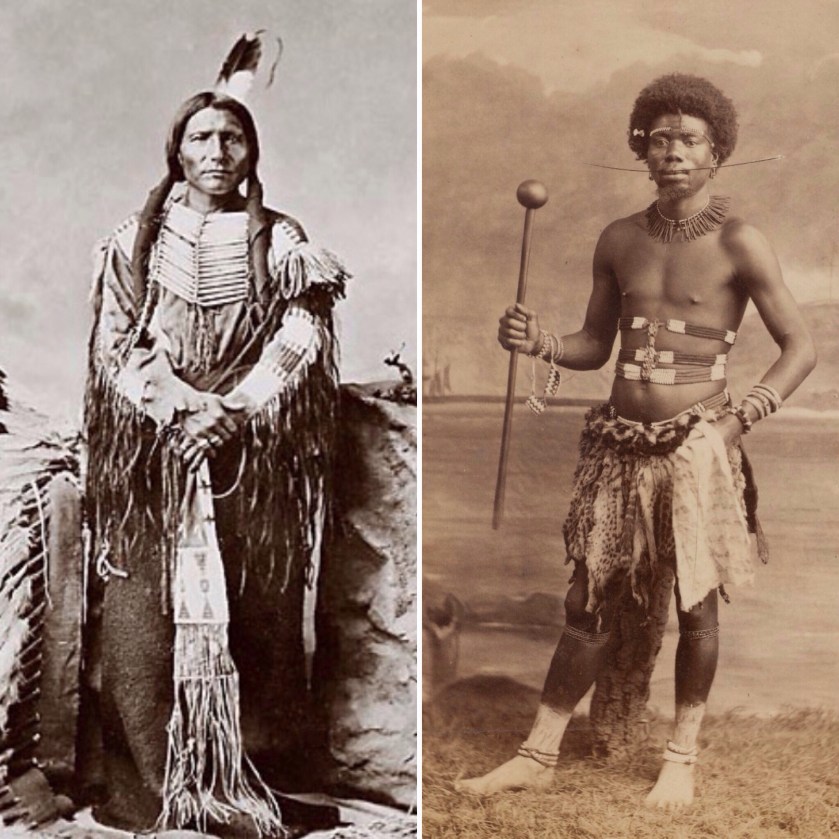
Native Americans and black Africans were the indigenous people of these two lands when Europeans arrived and began colonizing. The Portuguese, searching for a sea route to India and China, first circumnavigated the southern tip of Africa in 1488. Columbus’ Spanish-financed expedition arrived in the Americas just four years later. Despite the mistreatment of black Africans here, slaves in South Africa were from places like India and Indonesia. Something similar happened in North America, where it was difficult to enslave the native people and so slaves were brought in from elsewhere.
I sat in on a history class at Penryn College yesterday. They were in the middle of a long section on Native Americans. The focus on the day that I was there was on the Battle of Little Big Horn. The class went into great depth on the culture of the Plains Indians, the array of Custer’s forces, the reason for the battle. The teacher always referred to Custer and the US Calvary as ‘Europeans.’ I doubt that Athenian students study the Battle of Little Big Horn in such depth—or know anything about the Battle of Blood River.

I stand in South Africa and find myself imagining an alternative past, one where Native Americans had immunities to European diseases and so their population wasn’t decimated by the arrival of Europeans. I think about an alternative present where 80% to 90% of the United States’ population is descended from people who lived on the continent in 1492 and only 10% to 20% from people who arrived post-1492. I imagine a United States that, like South Africa, has many official languages: Apache, Blackfoot, Cherokee, Chippewa, Choctaw, Chumash, Delaware, English, Hopi, Iowan, Mohawk, Mohican, Narragansett, Navajo, Omaha, Osage, Pima, Salish, Seminole, Shawnee, Sioux, Wampanoag, Yupik, Zuni …
 No Foreign Lands