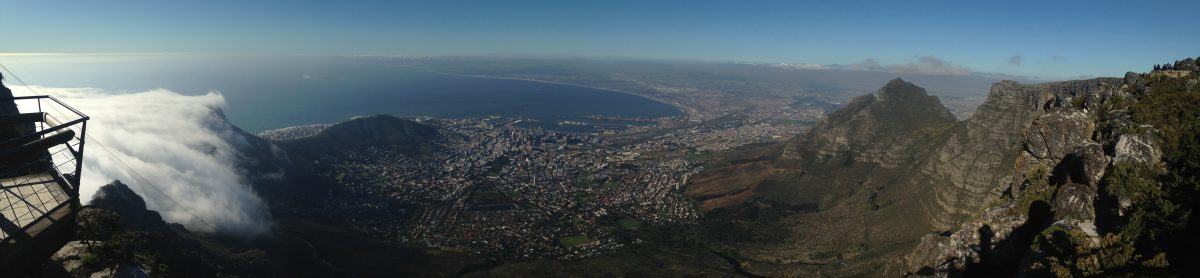
The first half of this week I am visiting four organizations in two townships that my generous host, Liz Macintosh, thinks would be good places for Athenian students to work. The townships are Masoyi and Zwelisha. These are sprawling residential zones covering valleys and hillsides in the middle of rural areas. They stretch for miles, house tens of thousands of people, and don’t appear on my local map.
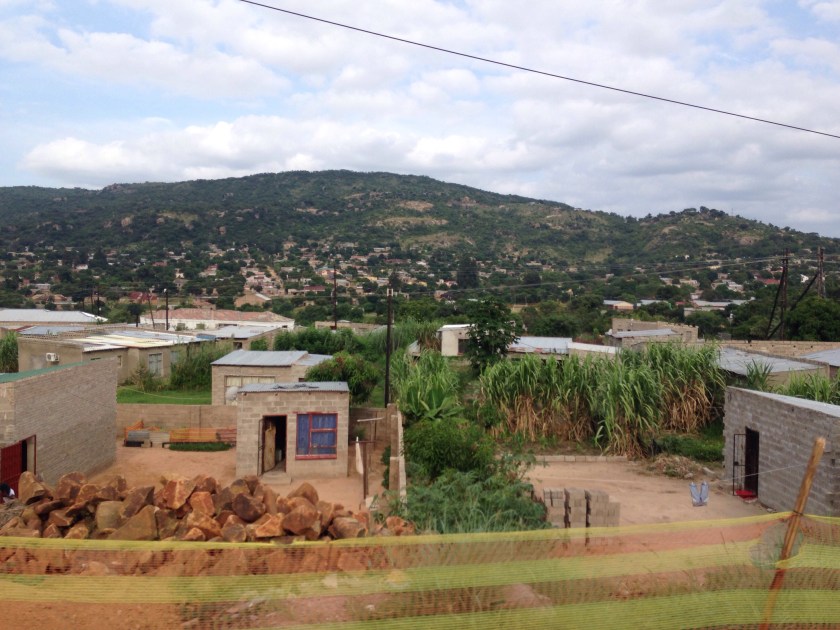 Last Thursday morning, we headed to Masoyi to visit Mshadza Special Care Center and Uthando orphanage. We heard there were protests blocking the road, but our sources said it was past our turn. As we got within 100 meters of where we would exit the main road, ironically located right at the local police station, there was a fire and rocks in the road. We turned back.
Liz had a gap year student, Isabella, placed at Mshadza. This was Isabella’s last day and Liz wanted to say good-bye. We called the head of Mshadza, Lucy, and she said to meet them at her home, which is located before the blockage. We waited in the shade of an avocado tree in Lucy’s yard and she and Isabelle soon arrived. We asked Lucy what the protests were about and were told ‘water,’ but we didn’t have much time together. We could see smoke from a new fire on the road, just above where we were. We were in danger of being trapped. Liz gave Isabella a quick farewell hug and Lucy accompanied us as we quickly drove out of the township.
We hoped to visit the organizations in Masoyi the next day, but were told Friday morning that the protests were even worse than on Thursday. Over the weekend, I heard several conversations where white South Africans derided the protests and expressed great doubt about their effectiveness.
On Monday morning I was supposed to head to Zwelisha, another township, to help at the primary school there and live with a local family. But I said that if we were considering having Athenian students work in Masoyi, then I needed to visit the organizations there. So we headed back to Masoyi on Monday. This time we arrived without incident.
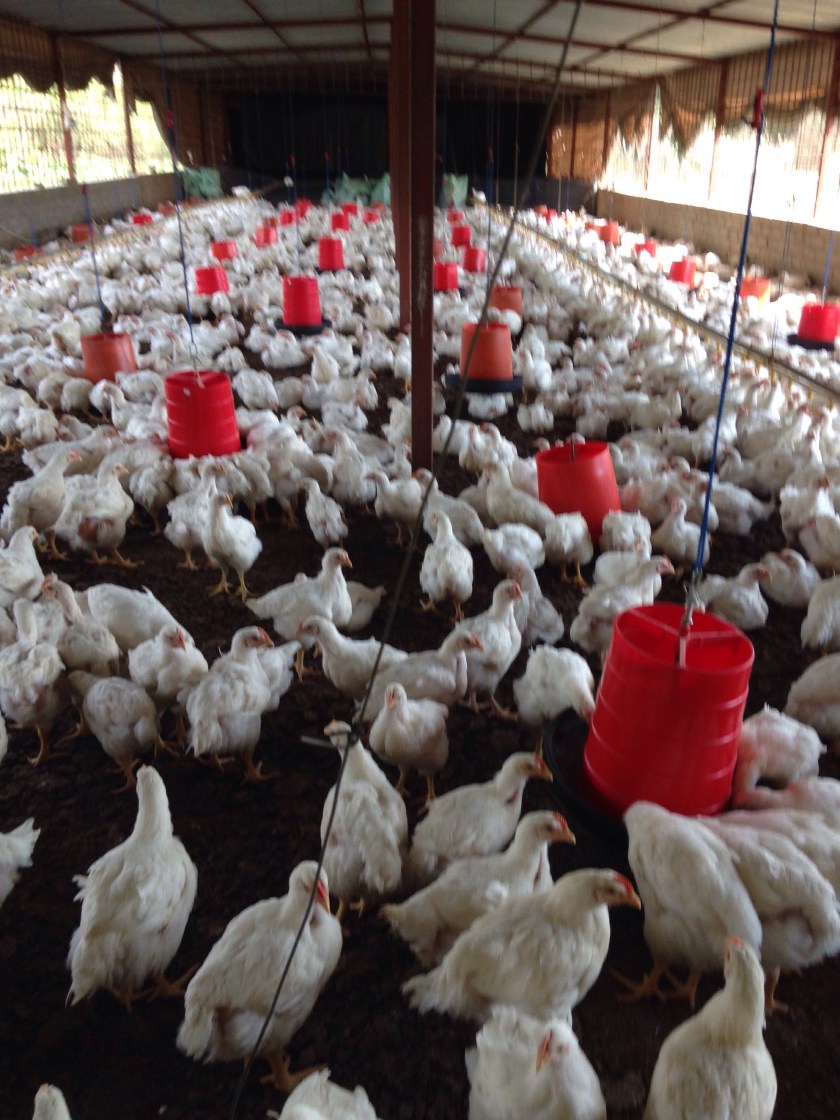
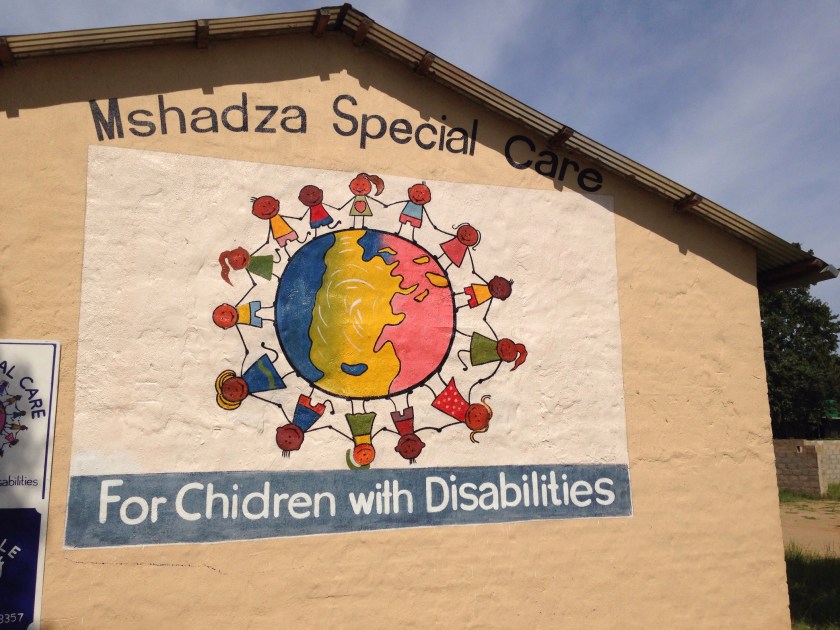 Mshadza Special Care is a program for young people with disabilities, both mental and physical. They have a large property with several big shade trees and a playground. They have so much land that Rotary built them a large chicken shed as an income-generating project. The centre wasn’t prepared to run a professional chicken farm, so now they rent out the building. They also grow corn and other vegetables to sell.
 This was the third organization serving children with mental disabilities that I have visited in South Africa. Mshadza is a government-funded centre. It is akin to the one in the Huhudi township of Vryburg–a safe place for the young people but not a school. Round Square built a handsome classroom building at Mshadza a few years ago and there were children sitting in the classroom desks when we arrived; however, they had only recently gotten a teacher and she had already resigned. With 25 students of varying grades and mental disabilities, I don’t think the center aspires to more than teaching the students how to write their name.
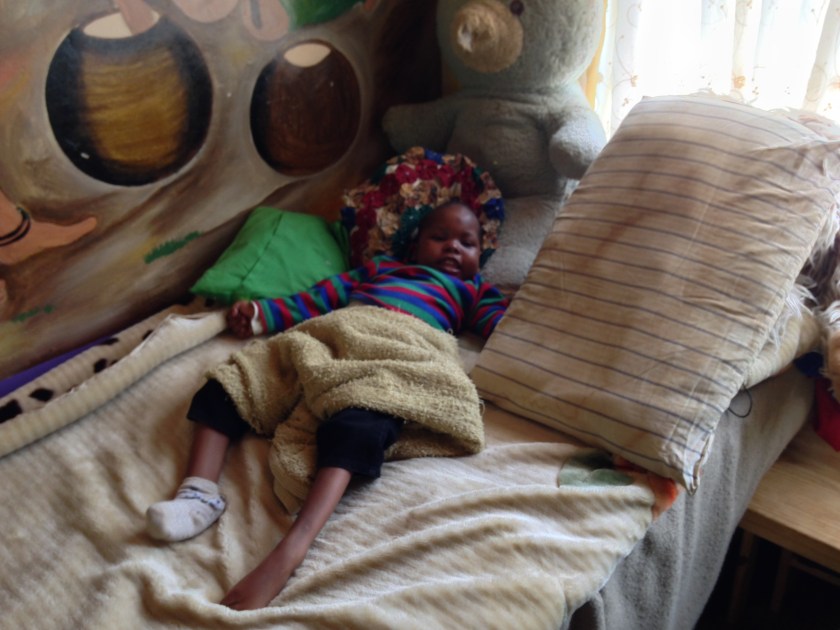 Besides serving breakfast, I saw almost no interactions between the children and adults. In the other main building, there was a group of young people playing together on the floor. In a corner were two younger children, lying on their backs on beds with nothing to do. The girl delivered huge smiles when Liz and I went over and cooed at her.
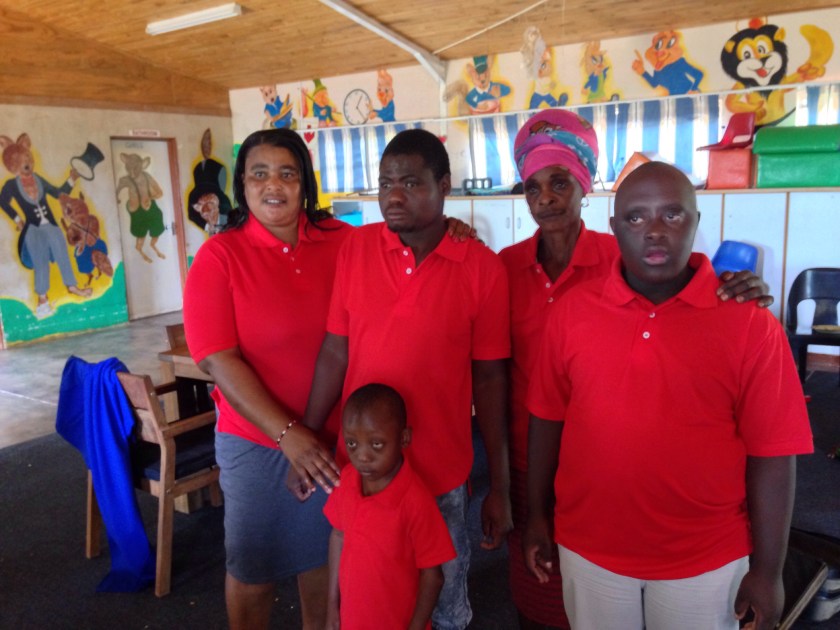 After we left, Liz told me about the two ‘children’ who are her favorites. One has a hunchback. She looks like a child, but is actually 30 years old. When the government officials visit, she looks like one of the children and so has been able to keep coming despite her age. She has nowhere else to go.
Immediately adjacent is Uthando Care Center, an orphanage with 24 children. Four children more are arriving within days. Liz said that most of the children there lost their parents to AIDS and are victims of human trafficking. There was another large orphanage nearby that was overcrowded and the local people wanted it shut down. In order to make sure that this orphanage closed, its neighbors burnt it to the ground.
We chatted with Tracy, the woman in charge of Uthando. She said that the government had cut off the water to everyone on this side of the Masoyi township a few weeks ago. She couldn’t explain why. As you can imagine, this caused much hardship, including for the orphanage. (Mshadza has a bore hole and so its own water source.) Tracy said that the government had agreed to turn the water back on in response to the protests, so apparently they had been effective.
In the late morning, we headed off to Zwelisha. This is part of another sprawling collection of townships on tribal land. The local family I am staying with seems to be one of the wealthiest around. Their home has two stories, marble floors, fancy shower fixtures, and an electric fence atop the surrounding wall. It is still being constructed so it also has no sinks, no kitchen counters, and only two chairs. Two brothers live there, one is an attorney and the other rescues bankrupt municipalities, so not your typical township family.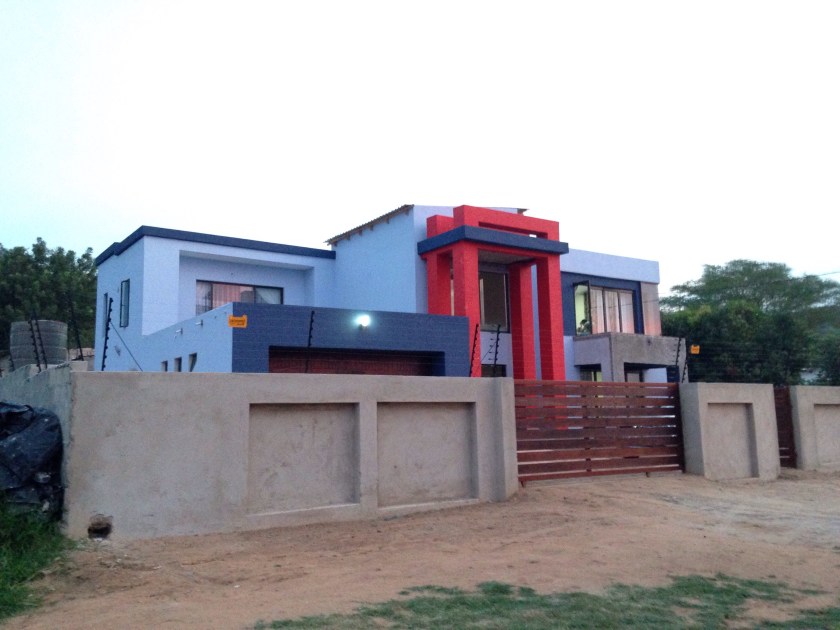
The brother who works with municipalities talked a lot about their problem collecting revenue, not about excessive spending. Water is included in the South Africa bill of rights. He said that every household gets 6,000 liters of water a month, but the government doesn’t have a way to measure how much people use. He said that governments can’t cut off water to force people to pay taxes. The municipalies that have had success getting people to pay taxes owed are those that also control the electricity, because this can be cut off in South Africa without running into human rights issues.
 I am exploring having Athenian students work with Zwelisha Primary School and Zwel Kids, its after-school program. On arrival at Zwelisha Primary, Liz and I met with Tandy, the principal. Zwelisha Primary goes up to grade 7 and has over 1,200 students. Liz asked about class size. The principal didn’t want to talk about it, but eventually acknowledged that it ran from 35 students per class up to 75 for three grades.
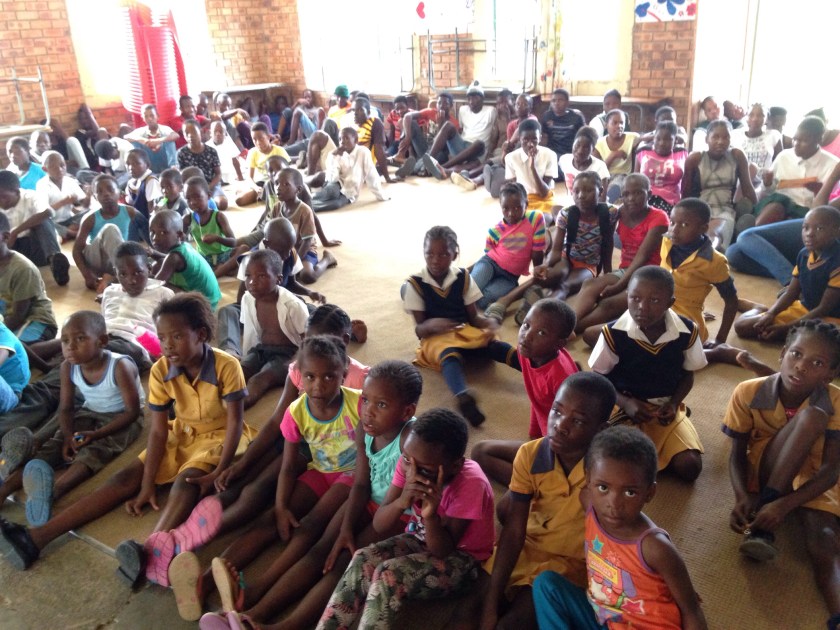 I spent the afternoon at Zwel Kids, the afterschool program. Zwel Kids serves ‘orphans and vulnerable children.’ Swati is the local language. Students speak it at home and it is the language of instruction through grade 3. In grade 4 the language of instruction switches to English. Tandy said grade 4 is the toughest grade and where she puts her best teachers. Connen, the director of Zwelkids, said that some of the students learn to read and write in English, but not to speak it. As you’d expect, the young people at the afterschool program were happily jabbering away in Swati. As I thought about Athenian students working there, I started making a list of games and activities that we could come prepared to lead, ones that didn’t require too much language.
 It’s the end of the term and so the students are all writing exams. I write this sitting with grade 7A, who are taking their exam in Social Sciences History. The topic is ‘The Kingdom of Mali and the City of Timbuktu in the 14th Century.’ Half the test is multiple choice questions. The correct answer to question one is Timbuktu and to question two is Mali.
Class 7A only has 42 students, so it is one of the smaller classes on campus. There are some light fixtures in the ceiling, but no light bulbs. All the light comes from the windows. There is a chalk board, a bulletin board with nothing on it, and two posters for Plant Cells and Leaves. The only other thing on the walls is graffiti. Beyond the exams and anything the students might have in their backpacks, there were no educational materials in the room.
I was at school at 7:15 for the daily teachers’ meeting. The meeting began with a couple of songs that would have made a gospel choir proud. The lyrics to the first song were variations on the phrase ‘I will never give up.’
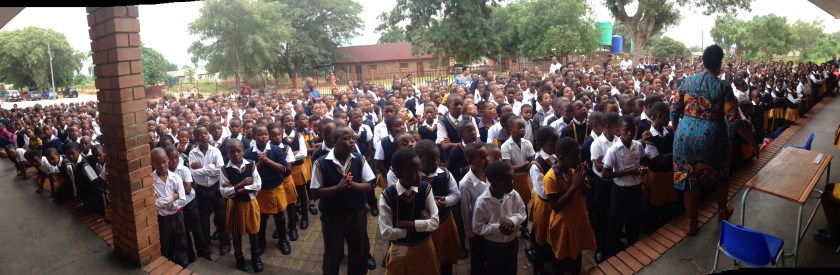 Tomorrow is a national holiday in South Africa—Human Rights Day. It is the anniversary of the Sharpeville Massacre in 1960. There was a special all-school assembly at the start of school. The students stood in long lines by grade. The meeting began with some chants and songs. I was introduced. The fact that a teacher had traveled all the way from the United States to visit their school was a source of pride. The girls’ soccer team had won the provincial soccer championship two years ago and received a bus for the school. The bus was on display. The boys soccer team has a match today in this year’s provincial soccer tournament and the school gave a loud cheer to encourage them.
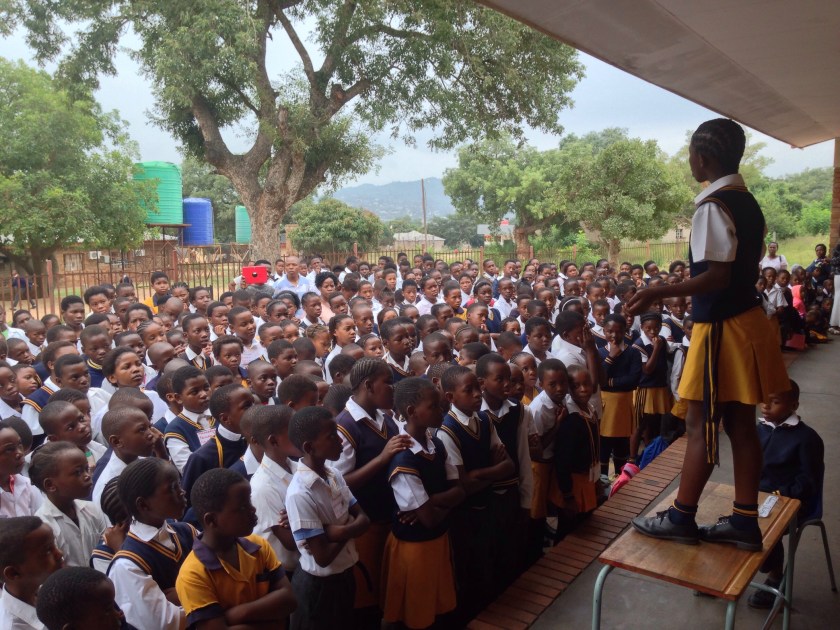 A few students did a presentation about the fight to end apartheid and Mandela. One girl acted out someone shouting abuses in Afrikaans at black students. As the one white person amongst the 1200+ people there, I wondered to what degree I was associated with that abuse in their minds. The principal explained the significance of the Sharpeville Massacre and, to close the assembly, led them in The Lord’s Prayer.
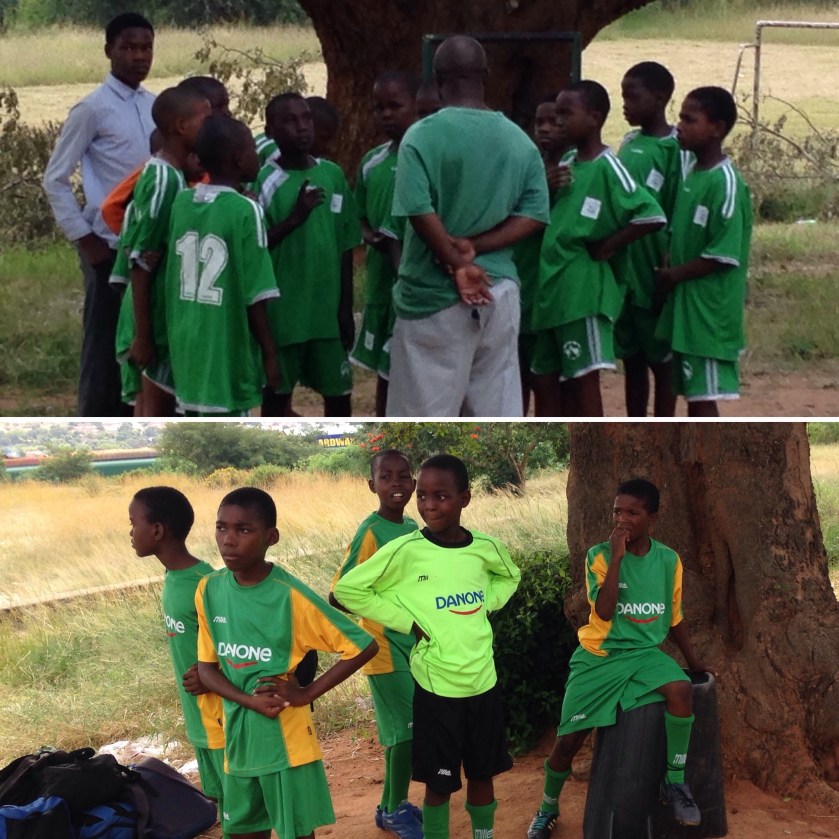 I spent much of the day watching the boys’ soccer team. The match was at a field at an abandoned teachers’ college. We had beautiful views over the valley looking at the mountains, but the school grounds had a post-apocalyptic feel to them. The grass on part of the soccer field hadn’t been cut in a while, so the ball would slip from view and roll reluctantly when play got to that area. All three teams had bright green uniforms, so to distinguish the players you had to look at the shape of the number or the striping on the uniform.. Zwelisha won one game and tied the other, so they advance to the next round. The boys were singing and chanting in the bus for most of the ride home.
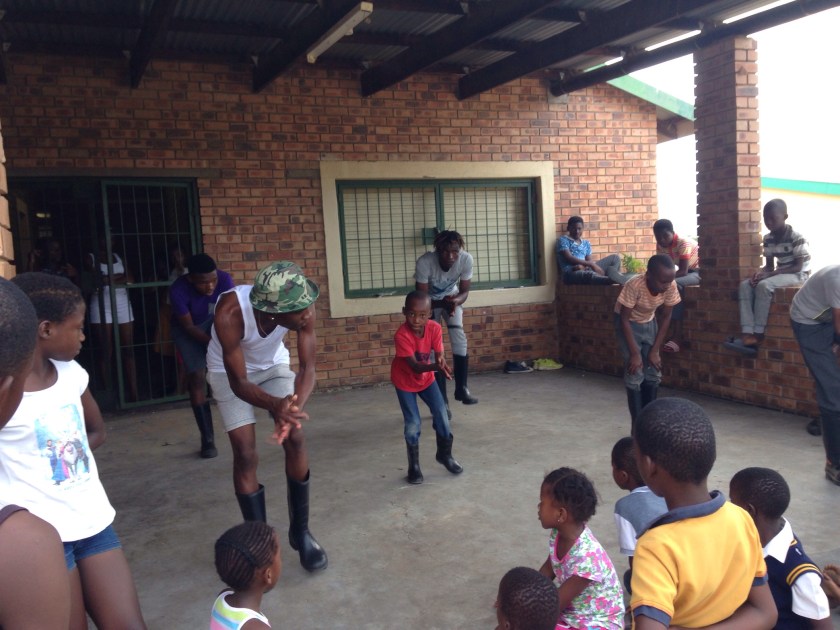 We didn’t get back to school until the late afternoon. Fortunately, I was in time to watch the after-school program’s gum shoe dance group practice! The final act of the after-school program was to give all the students a sandwich, apple and glass of juice as they left at 4:30. The students hadn’t eaten anything since the morning snack break at 10:00 am. The after-school center won’t be open for the national holiday tomorrow because they’d have to feed the students a mid-day meal and don’t have the money for it.
This is South Africa. Vibrant friendly people. Amazing cultural diversity. Great natural beauty. Along with extreme inequity, racism and inefficient government.
There was a road blockage protest in the area of Zwelisha yesterday. The issue is again water. Because I was living in the township, the protest didn’t affect me. I didn’t even hear about it until the next day when I wanted to leave. Apparently the locals all know how to get around the road blockages, so it is mostly white people who are affected.
I loved living in Zwelisha for a few days, walking the dirt roads and talking with people. I think I finally figured out why. When you are in a township, you are in black Africa. Suid Africa is out of sight. And these communities remind me of Tanzania, where I lived for a year.
 No Foreign Lands