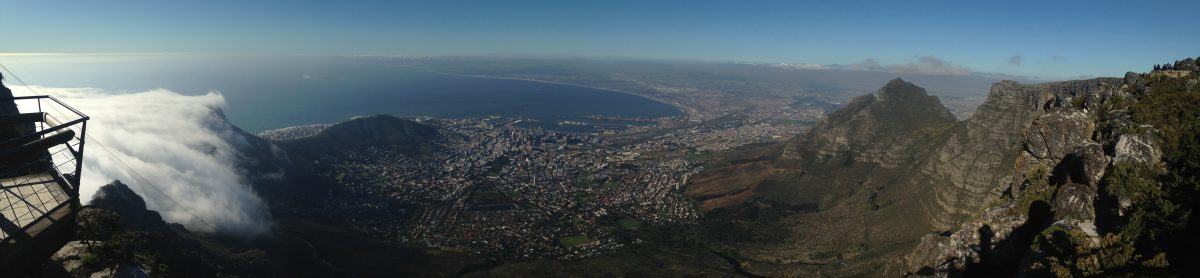
In Wadi Rum. The guests at Khaled’s camp were sitting on the rocks above the camp sipping tea, playing volleyball in the sand, waiting for the sunset. Then the wind picked up and a rainstorm arrived, my fourth in 40 hours in Jordan. And yes, I am in the middle of a desert. I was up at 5:15 am to catch a bus from Amman to here and spent the day in a land of legend climbing on rocks and sand dunes, but that is the sound of rain on the top of the dining tent.
South Africa. England. Jordan. Such fascinating places and striking transitions. My flight from London to Amman was scheduled to land at 11:15 pm. Since I wouldn’t be getting to the hotel until after midnight, there was a mix-up about which night I needed a bed in Amman. I talked with Ashraf, the proprietor of 7Boys Hotel near to the JETT bus station. He thought I was coming the next night and was all full up on the night I needed. He offered to find me a room in another hotel. I had also booked an airport pickup through 7Boys and Ashraf also offered to arrange transport from the airport to the new hotel and to the JETT station in the morning. I declined, but said I’d call if I got desperate. I figured out that I didn’t have a room in Amman right before it was time to head to Heathrow. After checking into my flight, I found a quiet corner and did some frantic searching. I found another hotel in central Amman, made sure its reception desk was staffed 24 hours a day, and booked a room.
The first time I arrived in Amman had been two years ago. I was heading to an international conference with a group of Athenian students. We landed in Amman to find two people waiting to give us a ride—the transport I had arranged and a bus from the school hosting the conference. The school folks had thought perhaps I hadn’t arranged transport?
As I walked out of customs at the Queen Alia airport in Amman this week, I recalled the earlier arrival decided I should look up just to make sure there wasn’t someone standing there holding a sign with my name on it. Sure enough, there was. A room had opened at 7Boys Hotel and Ashraf sent a car to pick me up.
On the 30-minute drive to the hotel, the driver and I talked about the changes in Jordan since I had last visited. He said that there are 1.2 million Syrian refugees in Jordan. The country’s population is now 9 million. It was noticeably lower just three years ago. Jordan has welcomed waves of refugees. Palestinians displaced by the creation of Israel in 1947 and then another wave that lost their homes after the Six Day War in 1967. Iraqis. Syrian. Even I could tell that there had been a lot of construction in Amman since I was last there 2 ½ years ago.
I didn’t get to sleep until after 1:00 am that night, but was up at 5:30 am to catch the 6:30 am bus to Petra. I thought the bus left at 7:00 am. I ran down the street in a light rain and just barely made it. Five hours later—twelve hours after arriving in the country—I was in Petra!
The land at Petra is beautiful with the gorgeous rocks and canyons and sky. Then add hundreds of 2,000-year-old ruins, mostly carved into the rock walls, but some free-standing buildings and their remains.
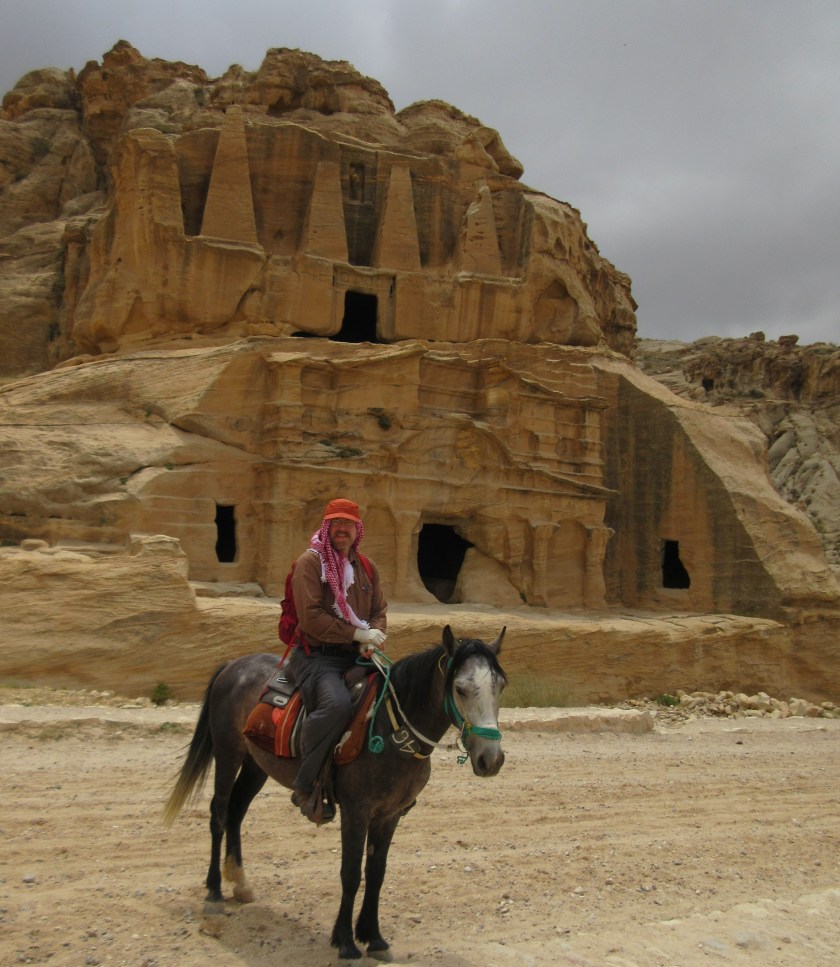 I accepted a ‘free’ horse ride for the first 400 meters from the parking lot to the entrance to the Siq. This was probably a mistake, as I then had to listen to his sales pitch for a longer ride that I would pay for. He wouldn’t take no for an answer. Perhaps he thought I was a tough bargainer. His price kept dropping each time I walked away.
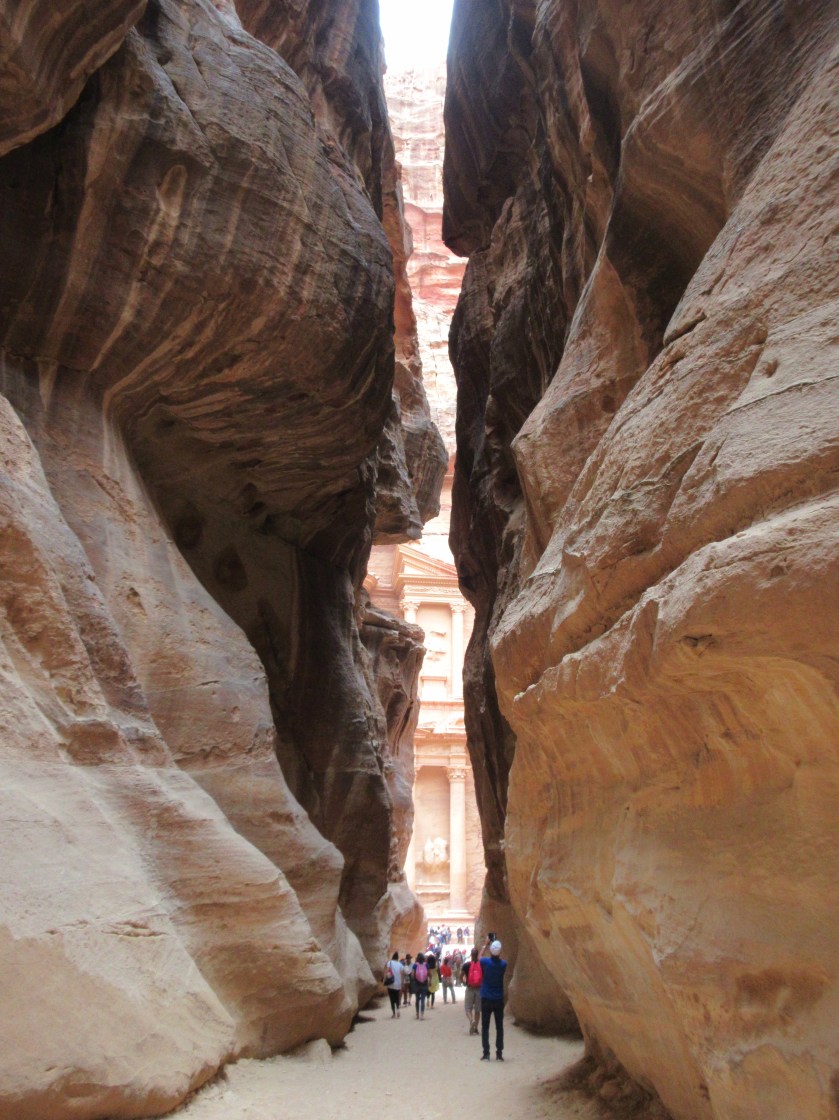 The Siq is a long narrow canyon. The first glimpse of the Treasury as you walk down the Siq is still thrilling the second time.
 On my first day in Petra I hiked to the High Place of Sacrifice. There is a ceremonial route up with various tombs and sites along the way. At the top is a sacrificial altar, with a basin for collecting the animals’ blood and a blood drainage system off the basin. I had read about such places—and maybe seen them depicted in movies—but I don’t think I’d ever been at one before. It reminded me a little of Machu Picture, a stunning place of ritual high in the mountains.
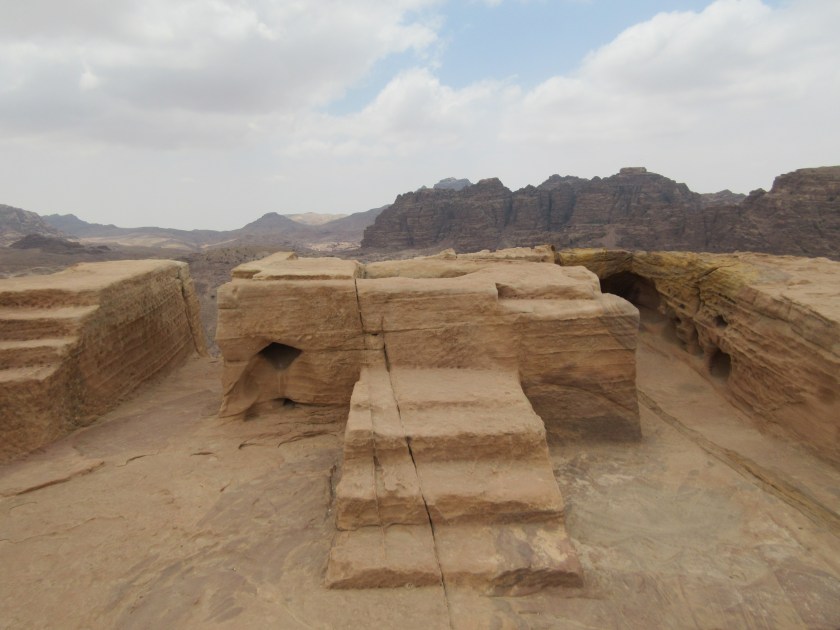 Part of what’s amazing about Petra is that you can pretty much go anywhere—hiking in any direction, scrambling over rocks. Or, as I saw two tourists do, you could use the Place of High Sacrifice altar as your picnic table.
There is only the one main entrance and exit to Petra, which includes hiking through the Siq. It’s about three kilometers from the central basin to the parking lot—uphill on the way out. I was heading to the mouth of the canyon when it started to rain—and rain hard. It was cool out and there was even hail. I huddled with some other tourists under a small cave. I waited there for a while and then walked on. A few feet further on I was told to come into a shop because the path ahead was closed because of the threat of flooding. After waiting there a while, I headed on with some others. We passed the theatre and entered the canyon on the way to the Treasury. The canyon floor had turned into a creek. When we got to the large opening in front of the Treasury, we were stopped. Hiking up the Siq was not allowed due to the threat of flash floods. Generally, you’re not allowed into the Treasury and have to stand in the opening and look; but there were people inside now, keeping out of the rain.
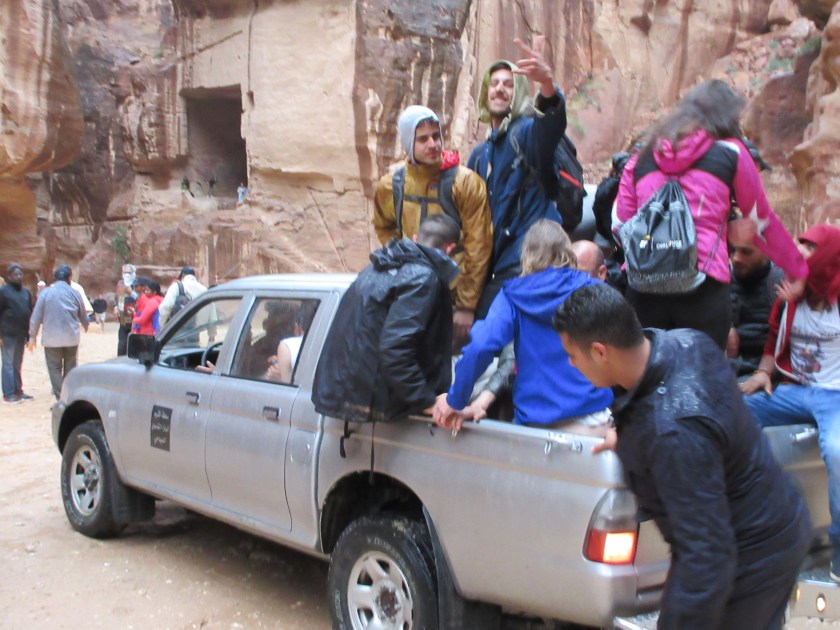 The people running Petra started bringing little pick-up trucks—yes, just like bakkies—down the Siq. As many people as possible clambered into the back and the truck drove up the stream flowing down the Siq to get them out. There were 3-4 trucks ferrying people out. After the second round left, they announced that the threat of flooding was past and that hiking out the Siq was allowed. I knew that my feet would be soaked by the time I was done, but how often do you get to hike out of Petra when the Siq has turned into a creek? How fun!
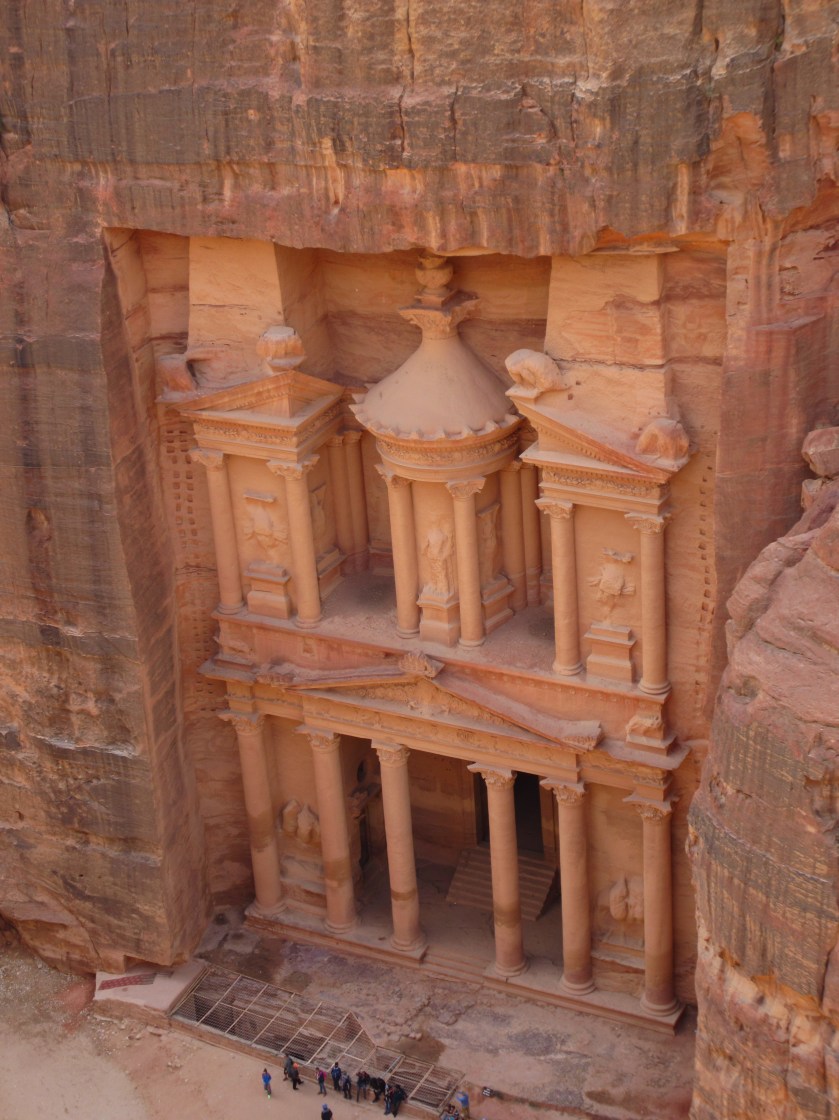 The next day I did another climb, this time to get a view looking down at the Treasury. It was remarkable looking at how the Nabataean people had cut the stairway into the mountain. I tried to imagine what their lives might be like.
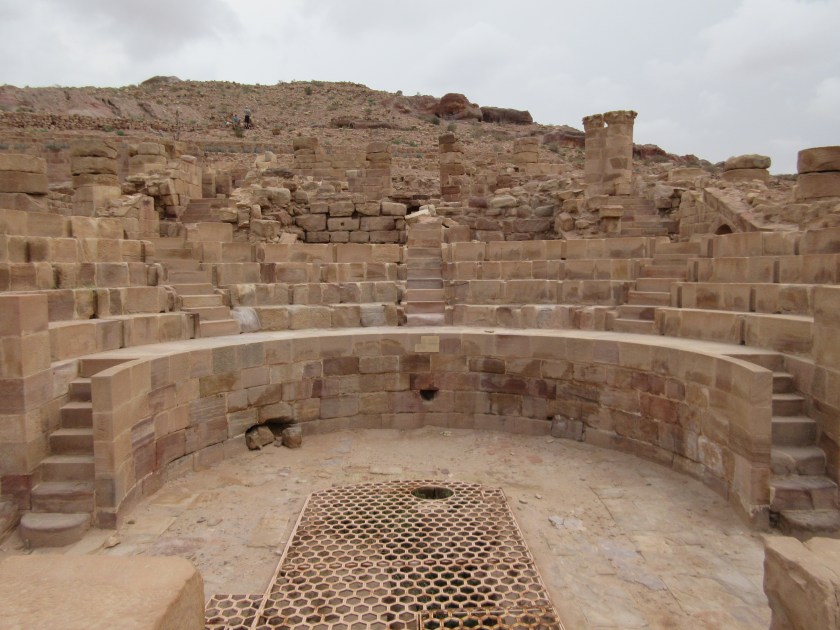
Behind the main temple in the center of the town there is a theatre. Archeologists think that this was not primarily a religious setting but a civic meeting place. I sat on one of the benches, wondering what their discussions might have been about. There are many Hellenistic elements to the architecture at Petra and I work at a school named Athenian, so I couldn’t help but imagine democratic discussions.
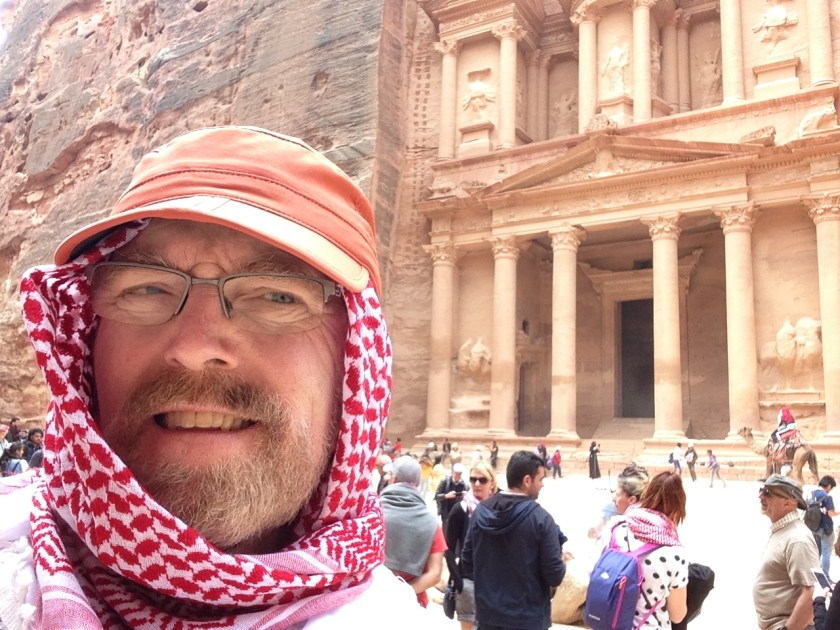
 I saw a keffiyeh head scarf in earth and terra cotta, the colors of my school–think of an ancient Athenian vase–and stopped to buy it. The Bedouin who used to live in Petra, now are allowed to sell horse rides and trinkets at the site. As you walk through the ruins you are regularly exhorted to stop and look at someone’s wares. The proprieter of this stall was reclining as he waited for a customer. Nomadic people carrying tents and carpets, chairs are not a big part of the local culture. For example, the room I’m in here at this camp in Wadi Rum, which is the main eating space, has no chairs. Carpets on the floors and walls. Pads to sit on and lean against. Tables with short legs, ½ meter off the ground. But no chairs. I thought of Passover and the question about reclining.
This man and I had a long talk. He asked, of course, where I was from. He said that the United States had done a lot of good—for Petra, for the local schools, for Jordan. We may have a ‘bad President,’ to use his term, but that is not the people’s fault and the US still does good despite Trump. He said: “In Jordan, everyone is equal. We may all be poor, but we’re rich in other ways.” And despite all of the immigration into Jordan, I hadn’t seen any shantytowns or electric fences around homes. And despite being neighbors to Syria—which the US, UK and France bombed last week—I think I’m safer here than in South Africa.
I asked my four taxi drivers in Wadi Musa where they are from. They’re not only all from Jordan, they’re all from Wadi Musa! One said his family has lived here for over 1,000 years. An older man said when he was a boy there were only three or four automobiles in town. People got around by donkey, camel or horse.
In Petra, there are donkeys, camels and horses that tourists can pay to get in and out of the site. The visitors, like me, mostly ride them timidly. But the locals also ride them. I saw two large Arab men going down the main colonnaded street of Petra on donkeys. They looked huge on the little donkey, except that it worked just fine. I thought of Jesus entering Jerusalem on a donkey.
The rain has left us. A fire glows in the hearth. A group of French tourists chatter across the tent. Three young men pass the hookah pipe around. Two Arab men wearing long white thobes and the traditional red Jordanian keffiyer lounge on cushions by the fire and sip tea.
We’re not in Kansas anymore—or in the Western Cape.
 No Foreign Lands