Rona works in marketing at Stanford Lake College and we got to know each other when she was the Round Square coordinator five years ago. She lives on a farm about 20 minutes from campus and invited me over for dinner my last evening at the school. My trip to the farm provided me with a perspective on South Africa that I probably won’t otherwise get.
The weather had been perfect for the three-day trek with the year 8 students, but a heavy rain fell within an hour of our arrival back on campus. We drove to the farm via Rona’s preferred route, the shortest path via dirt road, only the dirt was now mud. Even with the four-wheel drive engaged, we slid at many points like a toboggan. Rona managed to keep us on the road the whole way, but we nearly slid off a couple of times.
 As we drove along, Rona pointed out various pieces of land that were part of the farm. Actually, they have seven farms. Three have been reclaimed, post-apartheid, by the community through legal suits; however, the community ‘made a mess’ of running them. Rona and her husband were again managing those three farms, albeit paying rent to the community. They grow a lot of pine trees but are switching many fields to winter avocados. They are also experimenting with growing macadamia nuts. Their son is an agricultural chemist and he has planted some coffee.
Rona’s husband is named Nile; his father worked as a surveyor on the Nile River. He has a twin brother named Ferris. Nile and Ferris’ family have lived and farmed here for four generations.
Rona and Nile, Ferris and his wife, several other family members, and the farm manager all live next to each other by their saw mill. I said that I lived in a cohousing community and this sounded somewhat like that. Rona said that they live near each other for safety reasons. She said that a farmer was killed in South Africa each day and that these were gruesome murders. They are committed by people from Zimbabwe and Mozambique, not South Africans. For farmers, there is more safety in living together. At Rona and Niles’ farm, they have electric fences around their homes, large dogs that sleep outside at night, and bars on all the doors and windows. They sleep with guns by their side and their safe open. “This is how we have to live.”
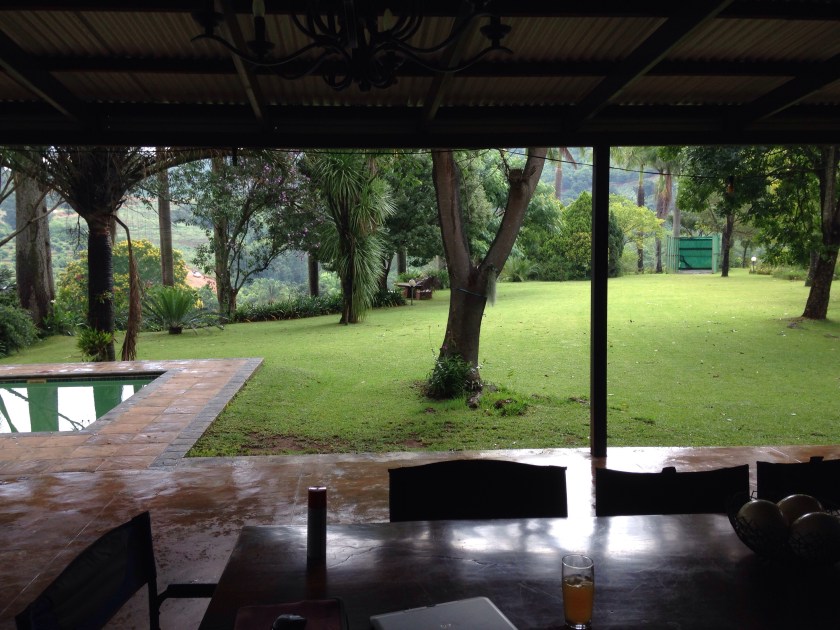 Rona and Nile have a beautiful house that seems designed for entertaining, with huge porches and patio areas adjoining a flat lawn and hot tub. Nile came home from work and then his brother came over. Nile made a fire and we sat around chatting outside for hours. Dinner was, of course, a braai.
Zuma resigned the night before and so the future of South Africa was a big topic. They are hopeful, but the situation is dire. They have over 180 workers—each of whom on average supports 11 other people—but the economics of running the farm are becoming unworkable. For example, because of corruption and mismanagement, the cost of electricity has increased tenfold in the last decade.
The electrician for the farm is a 67-year-old man. He had retired but couldn’t make it on his pension and so they hired him back. He’s physically very frail and has been shocked so many times that he has some symptoms of post-traumatic stress disorder. Needing to re-hire him as the farm’s electrician was an example of the challenges they face managing the farm.
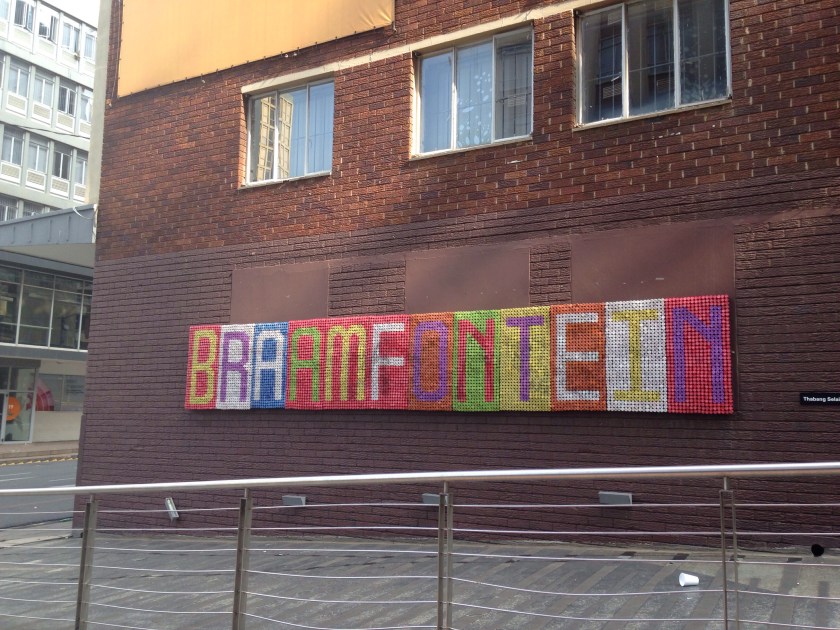
We chatted about my trip. The neighborhood where I stayed twice in downtown Johannesburg, Braamfontein, is one they won’t even enter because they consider it so unsafe. (I have heard so many white South Africans complain about safety in Central Johannesburg that I wonder if it is socially acceptable way to say ‘see what happens when you let those people run things.’)
Ferris and Nile have an aunt who lives in Denver. Ferris is very knowledgeable about the United States. He is reading Michael Wolfe’s book, Fire and Fury, and wanted to discuss Trump. He is also a Denver Broncos fan and we chatted about Peyton Manning and John Elway.
He seemed more of a United States booster than me. ‘Who would you want to rule the world, if not the US? Russia? China?” “Whenever there is a disaster, Americans are always coming to people’s rescue.” “Americans may disagree vehemently, but they rally as one nation around the flag when needed and that’s one of the things that makes the country great.”
The soundtrack for the evening was the buzz of the saw mill, which was constant. They have huge mounds of saw dust, which their son is trying to see if they can convert into bio-diesel.
Before going to sleep, I looked at the bars on my bedroom windows. I wondered if I was safer at my budget hotel in Braamfontein.
As we drove back to a campus the next morning, we passed a hillside that had been clear cut with nothing replanted. This is a piece of land that has been reclaimed by the community. Rona asked the leader of the community why they didn’t set aside some of the money from the sale of the timber so that they could replant. ‘If we did that, I could die the next day and then I wouldn’t get anything from it.’
 No Foreign Lands
A great book is my traitors heart.
LikeLike