It’s Sunday at Ken and Joy’s house. They live in New Kasama, a well-to-do neighborhood over the hill from the Bauleni compound. Ken and Joy have adopted two sisters from the compound who were regulars at Appleseed: Jenny is 10 and Lucy is 8. Both of Jenny and Lucy’s parents are dead, and they have a younger sister who died a couple of years ago. Jenny has sickle cell disease and was not getting treated. Ken and Joy stepped in when Jenny almost died. With the blessings of the girls’ family—their grandmother lives four doors from Appleseed–Ken and Joy legally adopted Jenny and Lucy. The girls now realize that Ken and Joy are ‘our real parents forever and ever.’

Jenny and Lucy have a leg in two worlds. Their parents are white teachers from the United States and they attend the American International School of Lusaka, probably the most expensive school in Zambia. And Jenny and Lucy are fully of Bauleni. Their friends are mostly from the compound and they are fluent in Bembe and Nyanja.
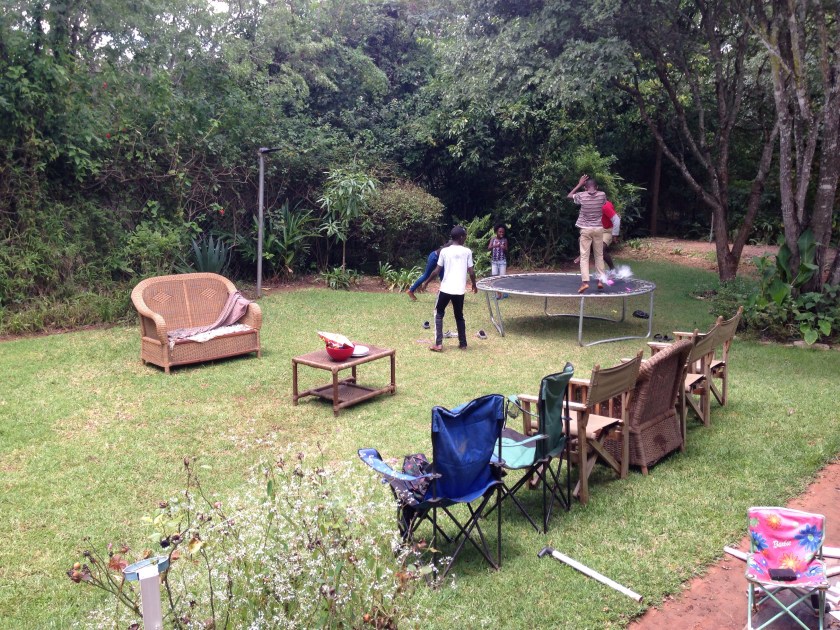 It’s Sunday and there are ten children over to play. Some are Appleseed children from the compound who called and asked if they could come over. Ken and Joy said no to some children who wanted to come, but who are not really Jenny and Lucy’s friends and just wanted to be at the house. There are also neighborhood children, some of whose families are squatting in a big abandoned home about 100 meters up the hillside. The building was being constructed when Zambia had its first transfer of power a few years ago–and constructed stopped.
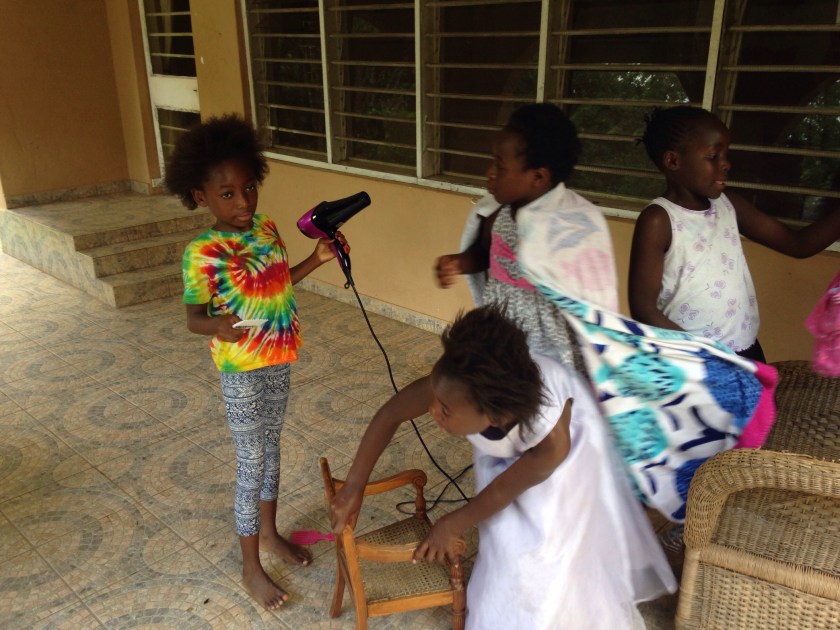
Jenny and Lucy’s house has luxuries not found in the compound. The grassy yard here at the house is a nicer park than can be found there. Most people in the compound do not have running water and the folks who are squatting up the hillside must walk a kilometer into the compound to get water. Jenny and Lucy have running water. Both yesterday and today they played a hair parlor game with their friends where the girls wash each other’s hair under a running hose. Did I mention that Jenny and Lucy have a trampoline?
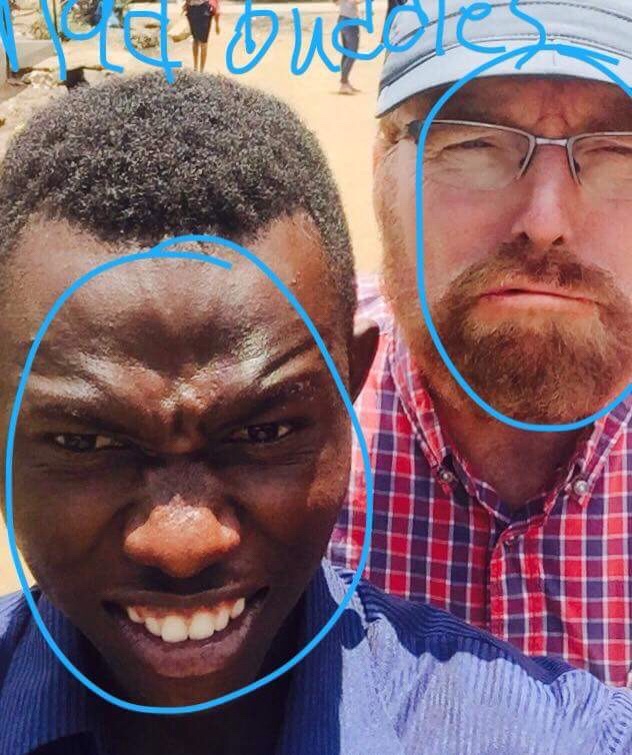
There are also four sweet young men that are at the house today: Paul, Isaac, Patrick and Jimmy. They were Appleseed kids and now work there. Paul and Isaac spent Saturday night sleeping on sofas in the living room. The men are hanging out, using the wifi, watching television, and doing laundry. I didn’t realize that there would be a crowd coming over to do laundry today and so put a load in the washing machine. Some of the young men are doing their laundry by hand, but that is much easier here because of the running water.
The other complication with water is that there has been an outbreak of cholera in Lusaka and Zambia. There have been about 3,000 cases nationwide and 70 deaths. Water from the local water system is not considered safe to drink. The municipality brought a half-dozen huge green water tanks into the compound for people to get water from, but this means walking to the tank and waiting in line to fill a container or two.
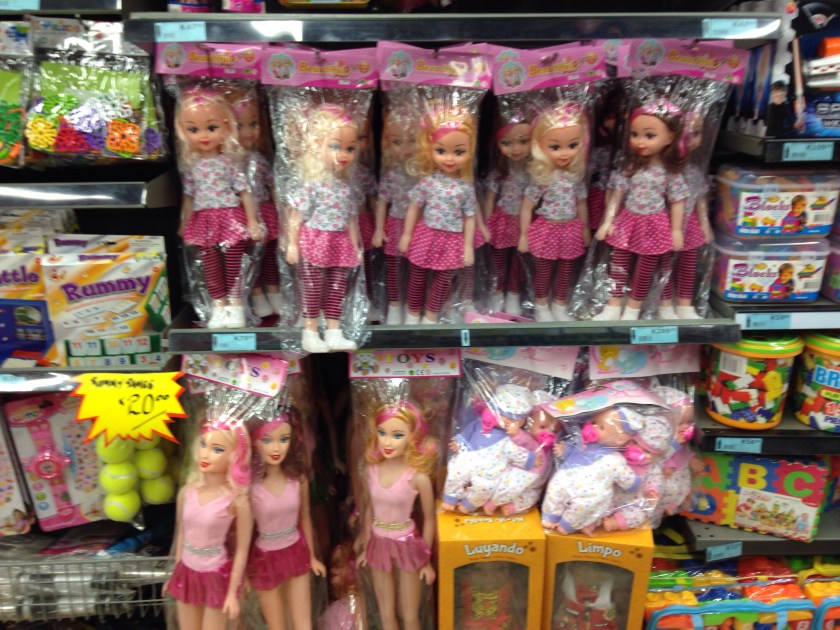
This afternoon, Ken, Joy and I went to Pick n Pay to do the grocery shopping for the week. Our shopping cart full of food cost a little over 1,600 Zambian kwacha, which is about US$160. This seems reasonable–until you look at local salaries. The American International School pays for a security guard 24/7 at all foreign teachers’ homes, including Ken and Joy’s. The guard makes 1,100 kwacha a month for working six 12-hour shifts each week.
Ken and Joy have two half-time gardeners, who they each pay 700 kwacha a month (more than the going rate). Ken and Joy told the gardeners that they would need to find new jobs in about a year. One of them has taken a full-time job working for another faculty member at the American International School. That family is paying 800 kwacha a month, so it’s barely more than Ken and Joy were paying for half-time work. Moreover, the other teacher lives 15 kilometers from here, so the gardener needs to move himself and his family to be close to the new job. The man was desperate to make sure he didn’t find himself with no income. Ken said that the unemployment rate in the compound is 70%.
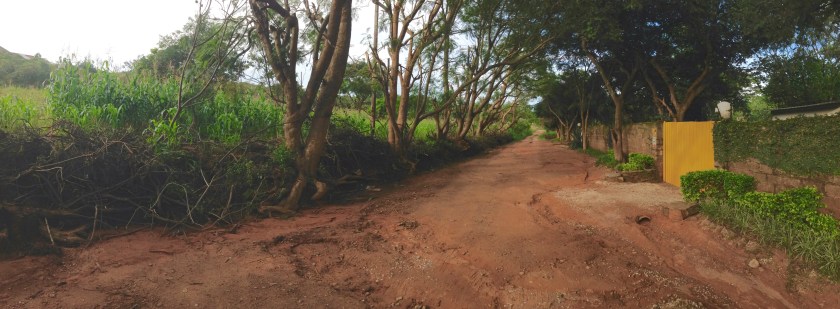
When the day finally cooled off in the late afternoon, I went for a 90-minute walk. I mostly trod paths I’ve already been on–past the protective walls of the well-to-do, past the open yards and corn fields of those with less to lose, and through the compound. As always, the compound was buzzing with people. Over 22,000 people live there now. It was 14,000 people just a few years ago, but people keep moving into Lusaka from the countryside. The only paved road on my walk was in the compound. The first paved roads appeared there within the last two years. Almost as helpful as the paved roads are the large gutters, which help keep rain water out of the street and yards.
Despite the poverty, the people in the compound are almost all dressed in clean clothes in good repair. They put a lot of care into this. Many of the used clothes that get donated in the USA are shipped to places like Zambia, so you’ll see people here wearing the same t-shirts that you would find in Oakland. Where attire looks different in Bauleni is usually the shoes, which are generally clogs or flip flips–or no shoes at all.
I arrived back at Ken and Joy’s as dusk was starting to fall. All the guests had gone home. No shrieks of joy from children playing and the clothes line and dryer were finally free.
 No Foreign Lands