The family I am staying with in Zambia—parents Ken and Joy and children Jenny and Lucy—are all at the American International School of Lusaka. They’re out the door at 7:00 each weekday morning. I’m on sabbatical and Appleseed runs on a later schedule, so I awake after they leave and get ready at a relaxed pace. Audrey, the house cleaner and cook, arrives at 8:00 and starts on the dishes from dinner the night before.
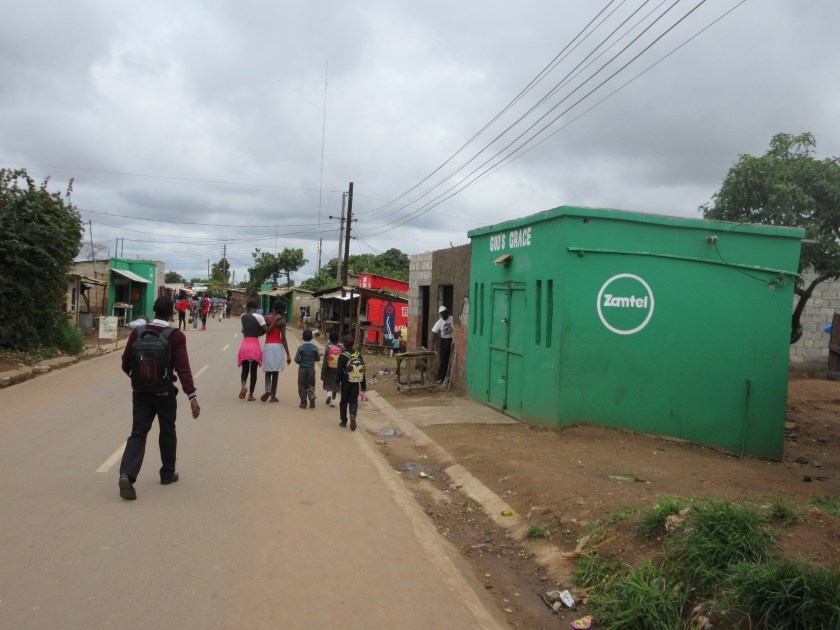
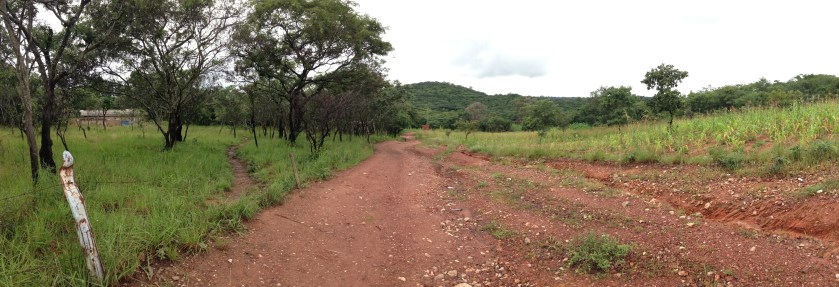 The walk to Appleseed each morning is one of the highlights of my day. The first half is on dirt roads past corn fields and green woods. Then I turn a corner and am looking down a paved road into the Bauleni compound. The streets and pathways of Bauleni seem to always be full of people. The men look like they could have stepped off the streets of Oakland, while most of the women are wearing a chitenge, a traditional wrap around skirt.
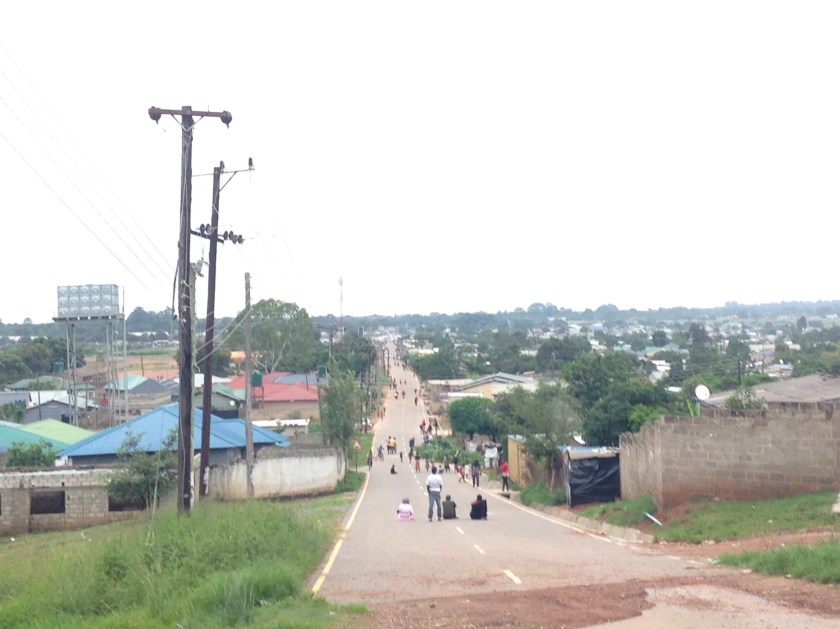 I pass small homes made of cinder blocks, often with long lines of clean clothes out to dry. The 3 and 4-year-olds playing in the dirt often call out ‘mzungu’ as I pass. Mzungu is the one Swahili word I’ve heard here and means European/white person. Interestingly, the use of the word began hundreds of years ago when European explorers arrived in East Africa. Mzungu is based on the Swahili word for a person who wanders around aimlessly. Perhaps the word is more fitting for me than I acknowledge.
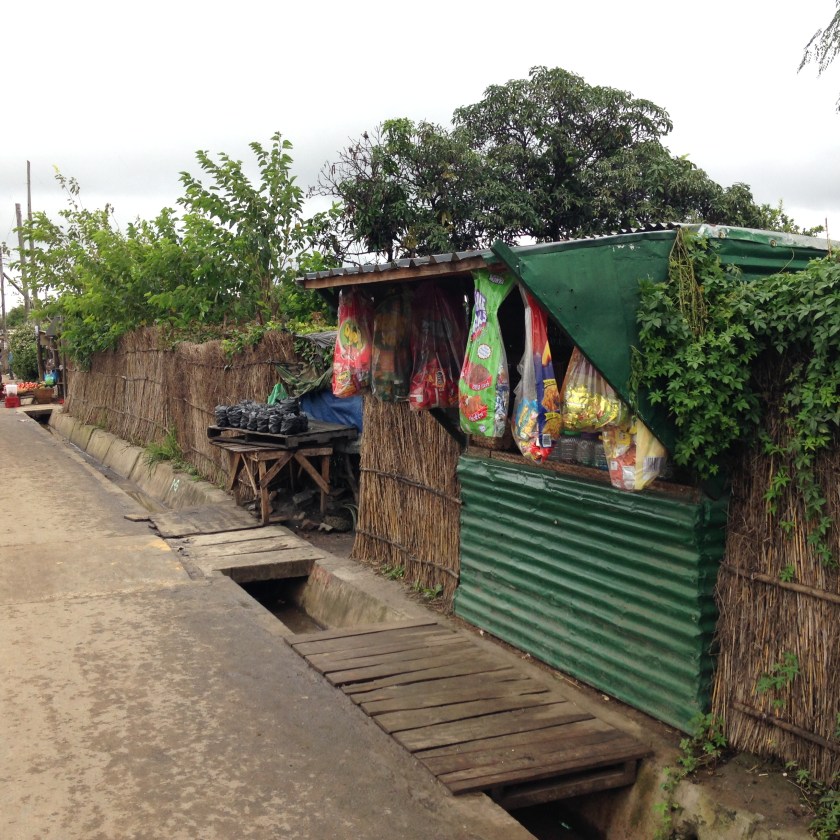 I pass tiny shops with piles of four tomatoes, small plastic bags of charcoal, and small bags of potato chips that are more packaging than food. Some of the shops are painted the distinctive color of one of the mobile phone companies—yellow for MTN, green for Zamtel, red for Airtel. I pass two elementary schools—one of them has over 4,000 students–and a dirt/mud football pitch. I make a right turn at the second big green water tank, where people with plastic buckets gather for cholera-free water.
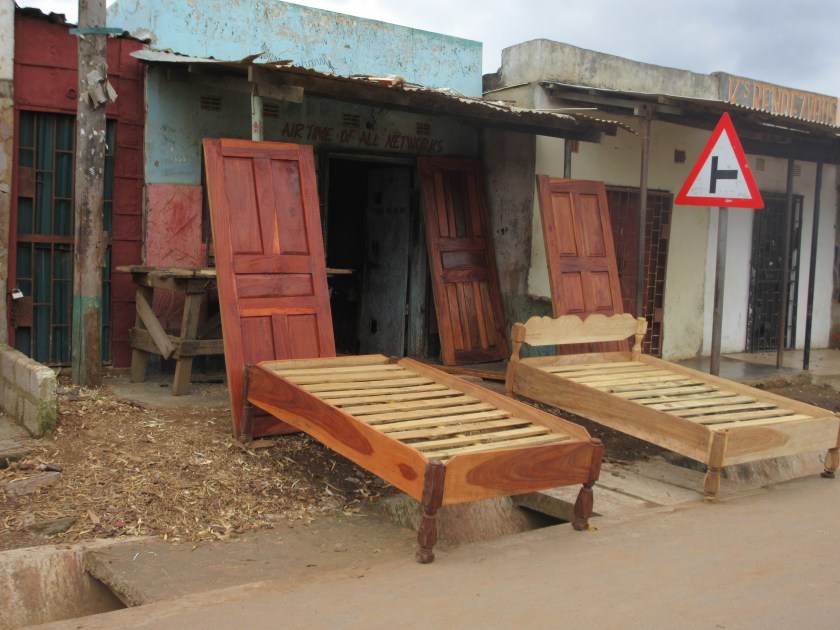
 Appleseed is up the road from a little shopping district in Bauleni. There is tiny hardware store, a few ‘business centers’ with a computer and printer, and a ‘barbar’ shop. For the furniture makers, both the production and the show room are outside. The wood is all planed by hand, which is physically demanding, and the product line appears to be mostly bed frames and wooden doors. As we get closer to Appleseed, I run into young people who know me and call out my name to say hi.
 If I arrive at Appleseed early enough, the daily morning clean-up is still going on. There is so much dust and dirt that Appleseed needs to be cleaned every morning—and the floor and yard swept a couple of times during the day. The computers all have cloth covers over the keyboard, screens and CPU towers overnight to keep out dust and dirt.
 There are always young people at Appleseed during the school day and on arrival I look for some to interact with. The local schools run in two shifts with half the students attending from 8-12 and half from 12-4. Most people here are tri-lingual–Bembe, Nyanja and English–but English is learned last. This mean I usually work with the 10-13 year olds. We read books, play games, do homework, sing songs. They are vivacious, bright and beautiful. They speak three languages, but their academic training is pitiful. Several of my favorite 13-year old read at the level of a second or third grader. The little book where I keep notes is full of words they’ve asked me how to spell, such as friend, brother, mother, don’t, love and lovely, thank you, so much and sponsor.
Zambia’s educational system has must-pass tests at the end of grades 7, 9 and 12. Students get shuffled along with their age cohort up until these tests. I can’t imagine how most of the young people I’ve gotten to know will pass the test at the end of grade 7. I wonder what my young friends’ lives will look like in a year-and-a half when they’re 14 or 15 and potentially out of school?
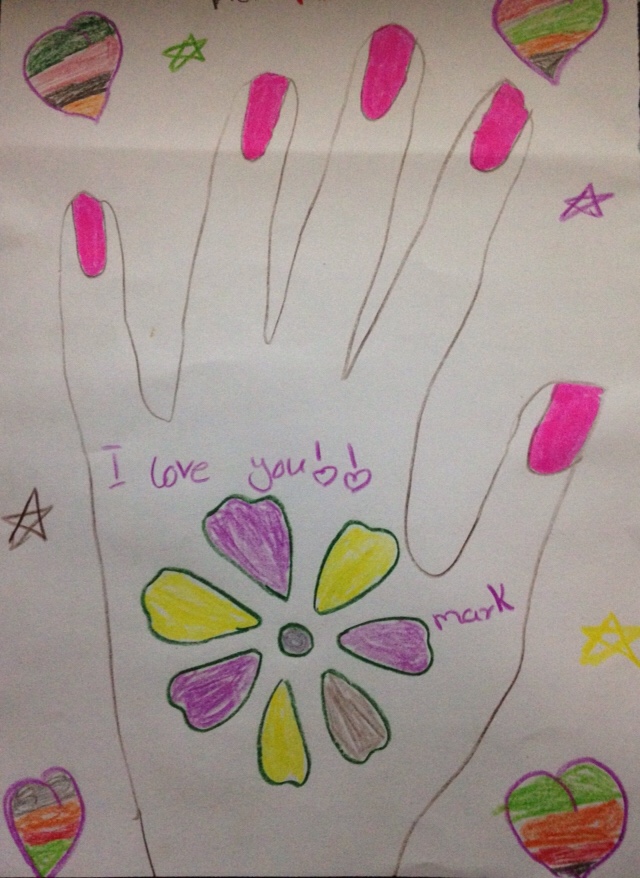 One of their favorite activities is to make drawings and cards. There are lots of colored pencils and because I’m here they have better access to the precious white paper. I have received dozens of beautiful pictures and cards full of hearts and ‘I love you.’
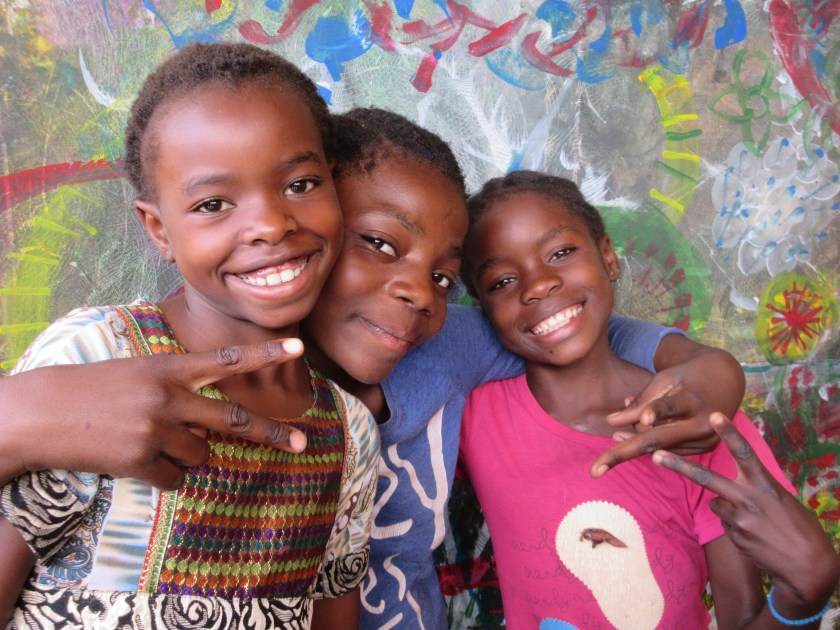
They have initiated several sessions of video making and picture taking. They created two dramas I filmed. Each had a similar theme: a poor mother with lots of children (roles all played by girls) had her money stolen away by men (played by boys). They also initiated several photo shoots where I took dozens of pictures of the beautiful young people here.
 Ken, Joy, Jenny and Lucy drive to Appleseed after school each day around 4:00 to pick me up. Jenny and Lucy have many friends here and so they may play, while Ken and Joy talk with people and solve problems. Then it’s over the hill and back to their house behind the wall.
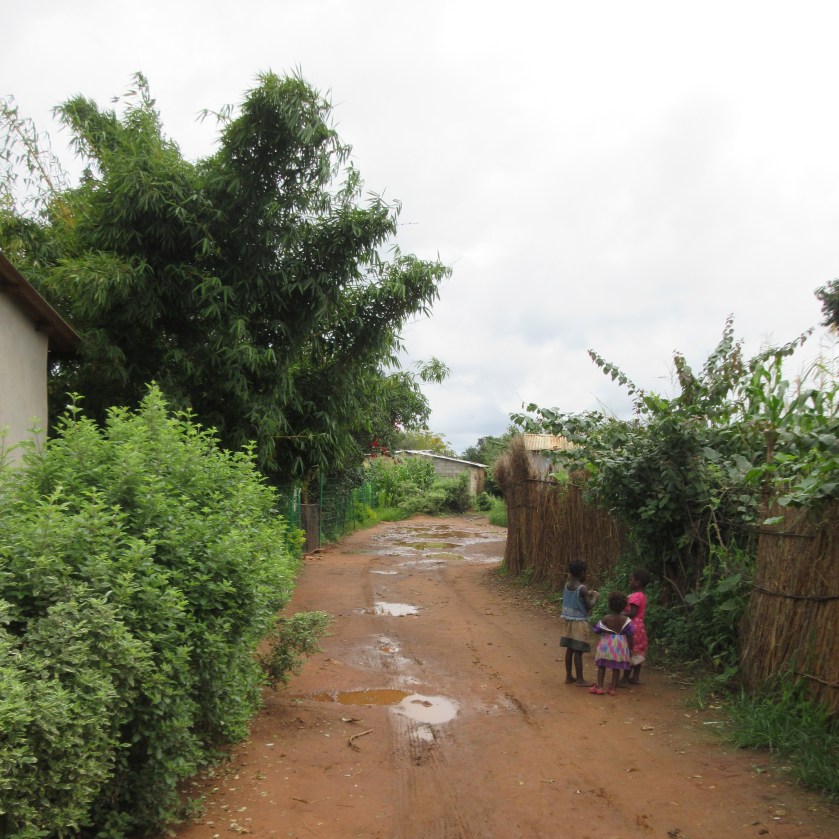
After school, Jenny and Lucy often play with their friends on the dirt road in front of their house. One day, three of the girls I have gotten to know at Appleseed walked the 15 minutes to Ken and Joy’s house. I didn’t realize they were out front at first, but eventually I figured it out and went to talk with them. Dusk was falling, however, and the security guard and I shuffled them off because we didn’t want them walking back to the compound in the dark.
We eat dinner and Ken, Joy, Jenny and Lucy head to bed early. I stay up late, typing away and managing my digital world. Then we wake up the next day and do it all again.
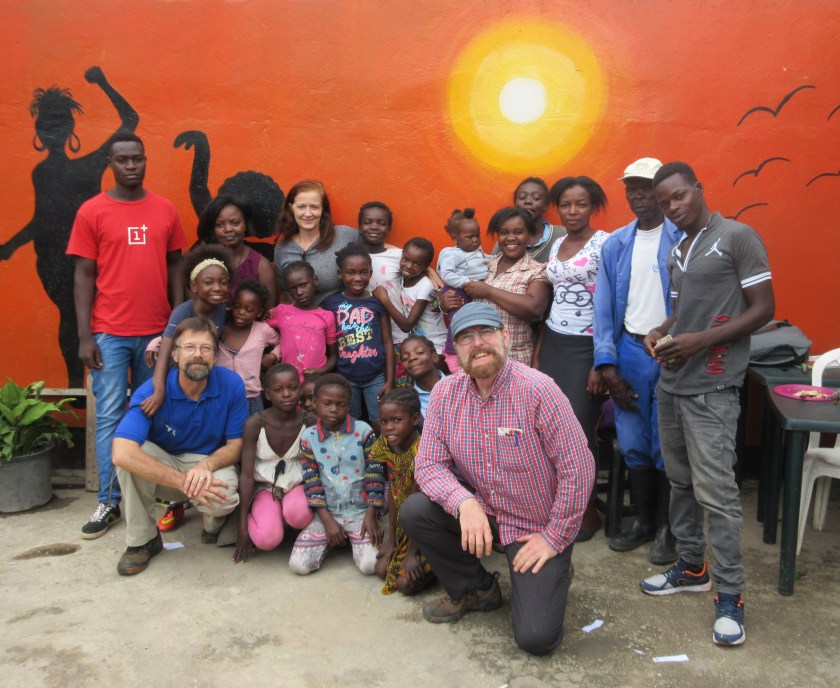 It has been an honor and a treat to be here for two weeks, to be part of the Bauleni compound, to work with the adults and young people at Appleseed, to live with Ken, Joy, Jenny and Lucy. Tomorrow I catch a plane back to Johannesburg. A way of life is ending.
But it’s not just changing for me. Ken and Joy have lived in Zambia for seven years and Jenny and Lucy since birth. Joy’s last day at the American International School of Lusaka is in two days. If all goes according to plan, Jenny and Lucy will get their US citizenship one year from now. Soon thereafter, the four of them will leave Zambia, move to California, and start adjusting to a new reality: the American way of life.

