
Yesterday, I headed to Colridge, the colored neighborhood, to work at a soup kitchen run by Maggie Losper. I met Maggie five years ago when an Athenian School group spent a day helping her. Maggie’s house is two doors from the shanty town on the outskirts of Colridge. The soup kitchen used to be run out of her home, but now she has a larger building down the street. The money for that building was raised by Wellington College, a Round Square school in the UK.
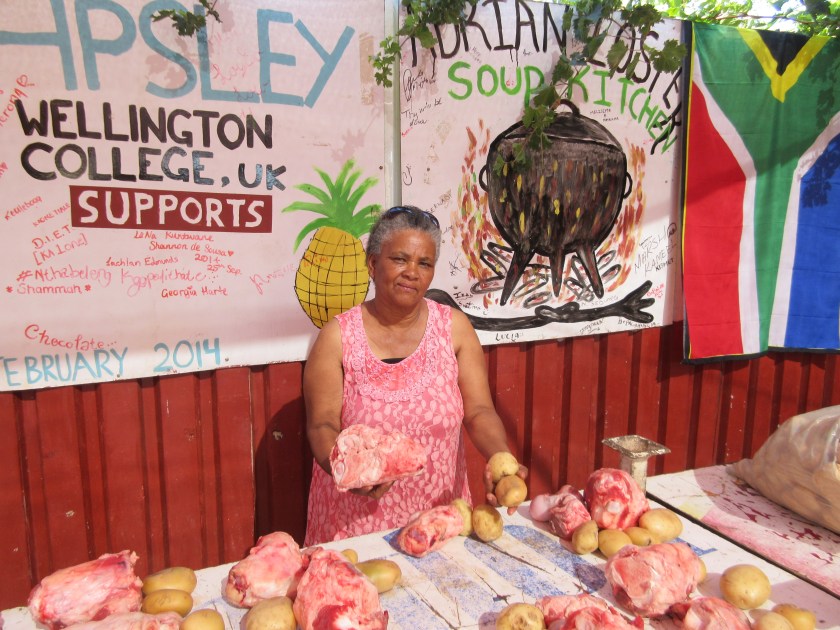 Maggie is 63 years old and seems to be helping everyone: children, elders, orphans, people with disabilities. She treated me like a major benefactor, making it sound like I was a big reason for the soup kitchen’s success. Maggie called the speaker of the city council and he sent someone to welcome me to Vryburg and thank me for my efforts. We
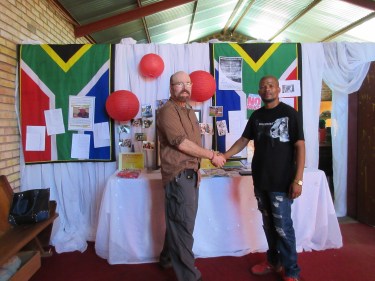
visited the primary school across the street from Maggie’s house, surrounded by a barb wire fence fitting a prison, and I had a long chat with the principal. Distributing food in the streets, we ran into the young men who run the community radio station and they said they wanted to interview me. I had to keep pointing out that Maggie was the reason for the soup kitchen’s success. I was someone who helped one day over five years ago and had returned.
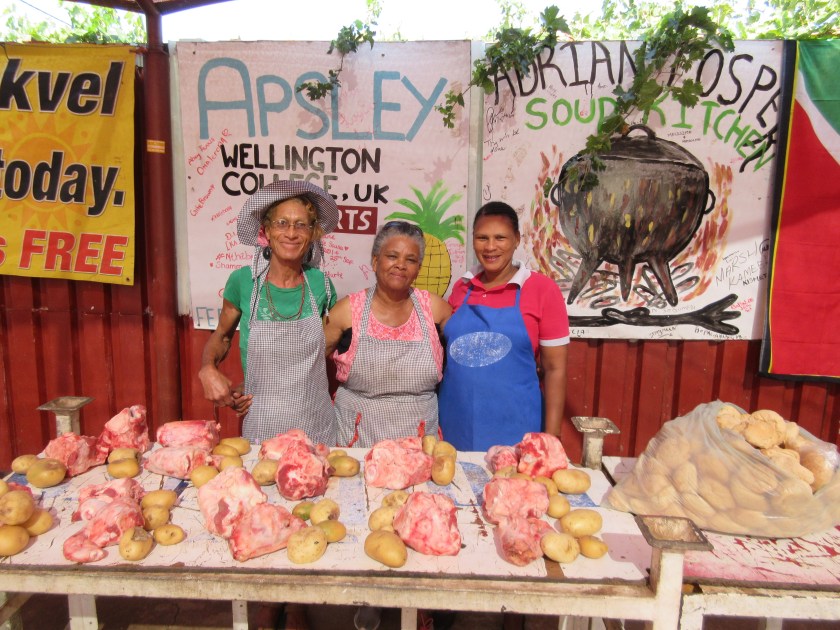 Two other people worked all day with Maggie running the soup kitchen. Anita is the friendly and efficient cook. The other helper is Kathy, a transgender woman or, to use Maggie’s term, a ‘man woman.’
On arrival, my first job was prying over 40 large hunks of fatty beef out of the freezer. This was not a pleasant task and I wondered if it was a test. We made Sunday dinner bags, which consisted of two pieces of the meat, four potatoes, and some hard bread. They didn’t have enough plastic bags, so we had to cut up big bags and tie them up to make smaller ones. I wasn’t very good at this. Then I helped make fry bread or, as they called it, fat bread. Gratefully, I possess some skills in working with bread dough.
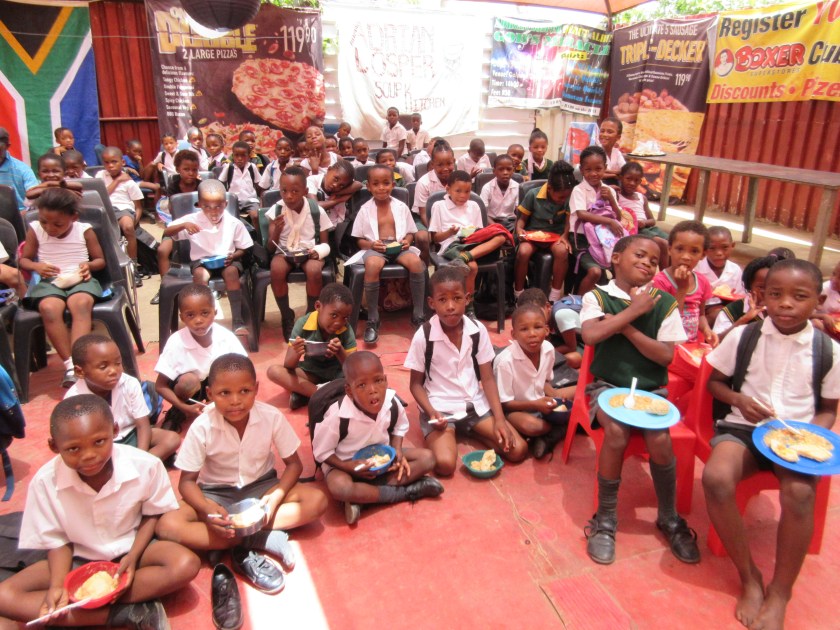
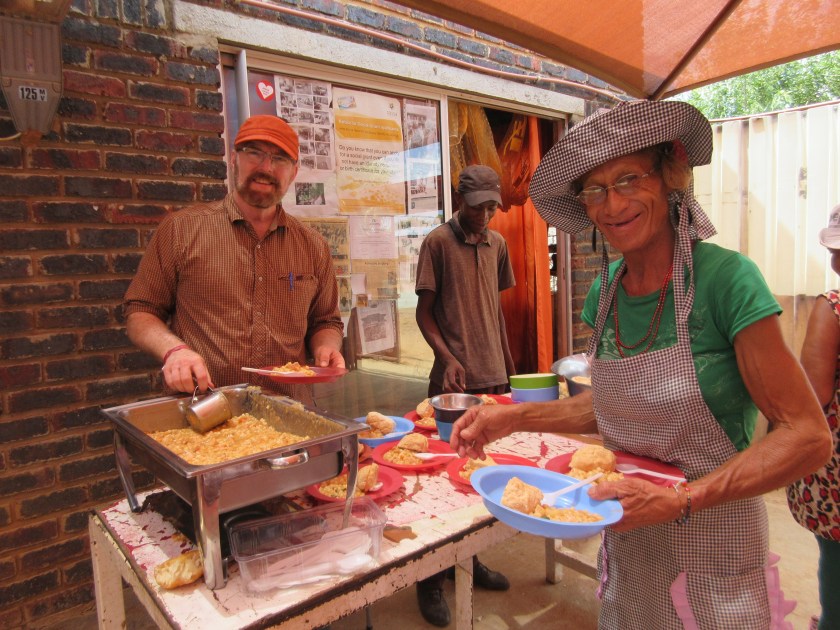 The school day ended at 1:00 and 100-200 students came by for lunch. Lunch was a stew with beans and meat, a half-sandwich with cheese, and a lollipop. There weren’t enough plates and spoons for everyone, so half the students had to wait for the first group to finish and for their dishes to be washed.
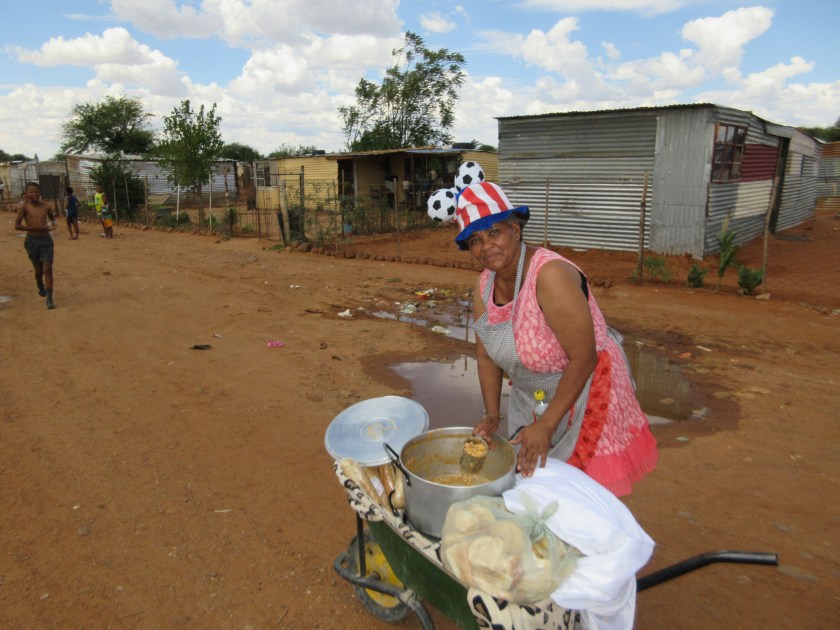
 After the students left, we hit the road. The remaining stew, sandwiches and fry bread were loaded into a wheelbarrow and the remaining dinner bags went into a shopping cart. Our meals on wheels program rolled up the block to the shantytown. Young children came running with a bowl and we’d give them a half scoop of stew and some bread. The adults got a Sunday dinner bag.
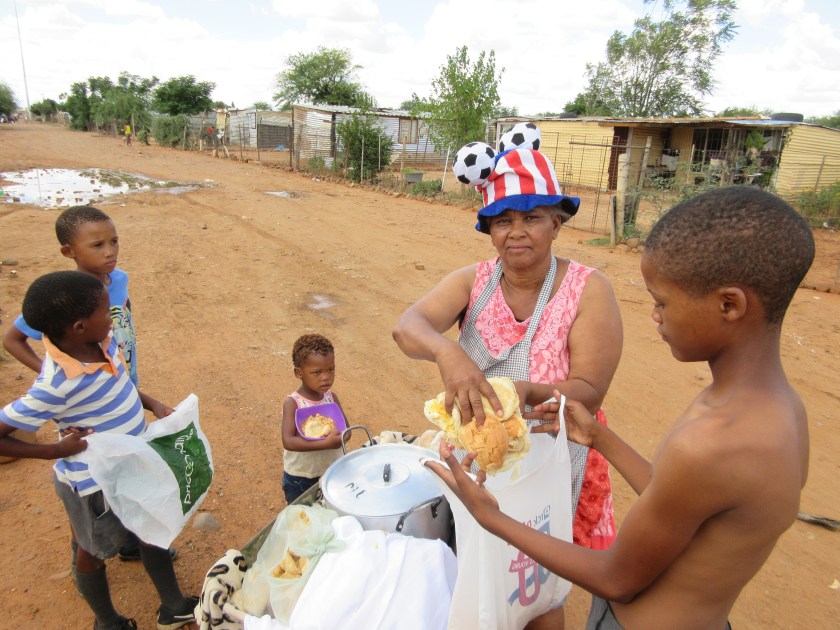 The scene really didn’t seem that different from many neighborhoods—women hanging clean clothes out to dry, children playing in the streets—but the streets were dirt and mud, the houses were one room and made of aluminum, and there were a lot of people about.
There was not another white person in sight all day. That evening, Claire asked if it was strange being the only white person there. ‘No, but it felt odd to be treated like I was Bill Gates.’ Perhaps what I think of as my modest access to resources makes me akin to Bill Gates here.
 No Foreign Lands
Mark! I love your posts. Talking to you brings me one facet of the experience you are having, your writing and pics bring forward many more. Thank you for being such a force for good on this planet, Bill Gates, or not.
LikeLiked by 1 person